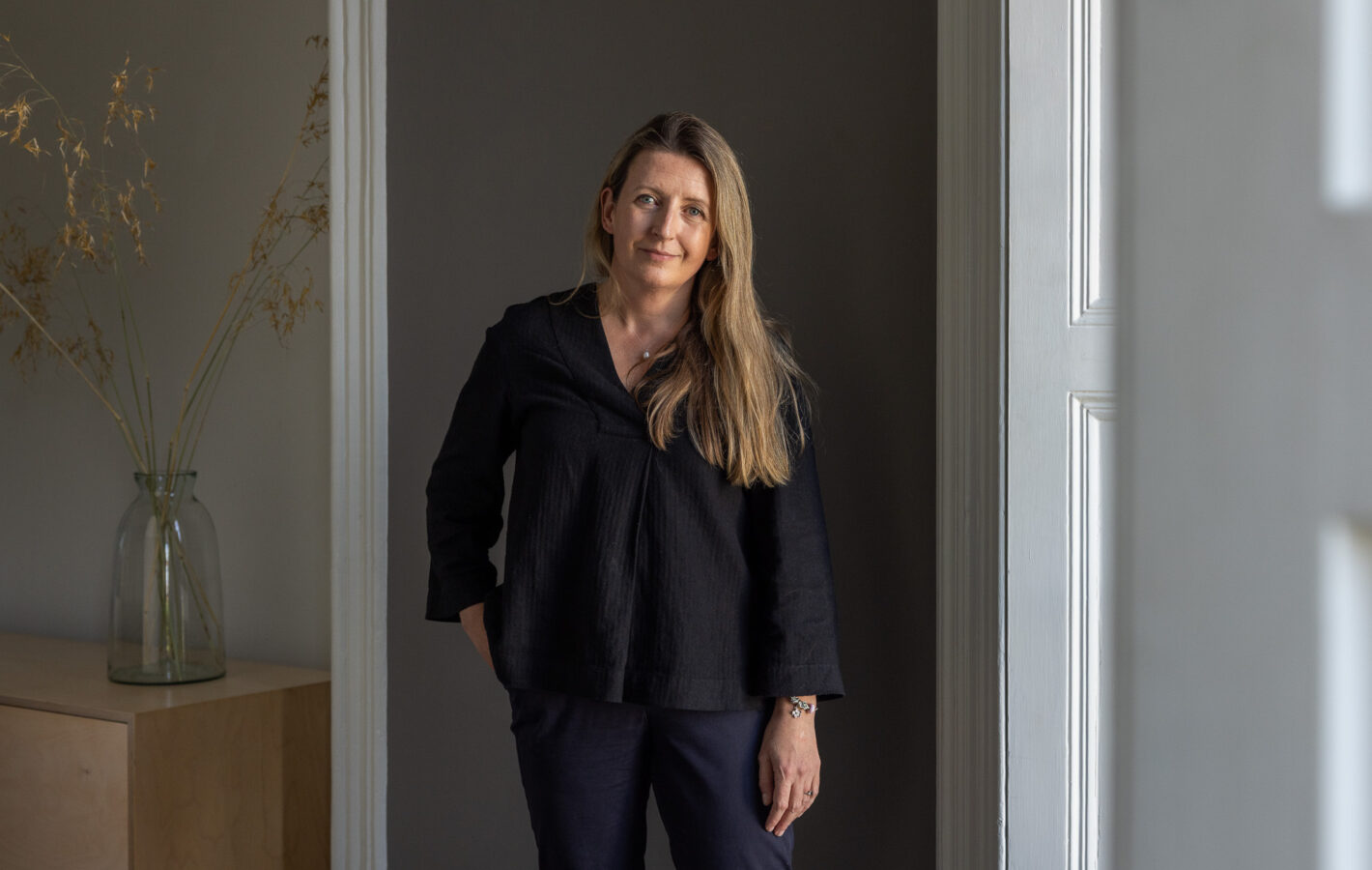
Eli is a Social Impact Researcher based in our London studio. Her work sits between research and design practice, exploring how social impact can be built into projects from the earliest stages, before the red line has even been drawn.
With a PhD by Design and an academic background at Central Saint Martins: University of the Arts London and the Universities of Bristol and Reading, she brings a wide range of research methods into live projects.
Her work and publications focus on bringing research and practice into closer alignment, expanding the kinds of knowledge and evidence we value, and helping to close the gap between the anticipated social outcomes of a project and what people ultimately experience — creating tangible, lasting positive impact for all.
What’s your take on the direction of travel for social impact research?
I think the industry is moving away from regarding social impact as something that can be meaningfully captured at a single moment in time. Our clients are now looking for ways to evidence genuine, long-term social impact, which develops through relationships, trust, and time.
I’m increasingly interested in thinking of impact less as an outcome and more as an ecology. So, rather than asking only what a project delivers, considering the relationships it strengthens and what it helps people to do. In a fast-paced industry that is naturally transaction-led, the challenge is creating room for pause and reflection so we can embed these values into our practice.
This means broadening what we count as evidence. Metrics still have a role, but they need to sit alongside lived experience and other ‘soft’ forms of knowing. It’s going to take a culture shift. One that asks the question: how do we slow down, make the most of the tools we have, and develop appropriate new methods?
As a team, we’re working to democratise the research tools we’re developing, so that our design teams can bring clients and communities into the research process across a project’s entire lifespan.
Tell us about a recent research piece that captures the kind of work you care about.
I really enjoy making maps with people. Over recent years I have been developing and refining an approach that explores how we can locate and discuss social values. People already have a keen sense of what matters most to them locally, the challenge is bringing that together.
Recently, I made maps with children and young people at a country estate in Kent. What emerged wasn’t just a list pf places, but a rich vision of how care, play, freedom, learning and sensory experience interact and are interdependent with our relationships to plants, animals, the wider environment and each other.
Making maps is a way of sharing and imagining things together. Here, research can help us be more deliberate and precise in how we treat the social dimension of a place.
Tell us about a moment of positive impact in your career — the kind that made you think, ‘this is why I do my job.’
We recently took on our first cohort of social impact student placements in partnership with the University of Westminster and the London Festival of Architecture.
The students brought their own lived knowledge and understandings of university spaces into a live project — a building on their own campus at Westminster — whilst at the same time gaining a fair wage and structured experience of working and researching within an architectural practice.
They developed independent research around a brief, with regular mentoring and feedback from the studio.
For me, the impact of this was not simply learning how our designs can benefit from including a wider range of perspectives, but also the potential for Strides to support meaningful pathways into diverse careers in the built environment through opening our studio doors and creating opportunities.
