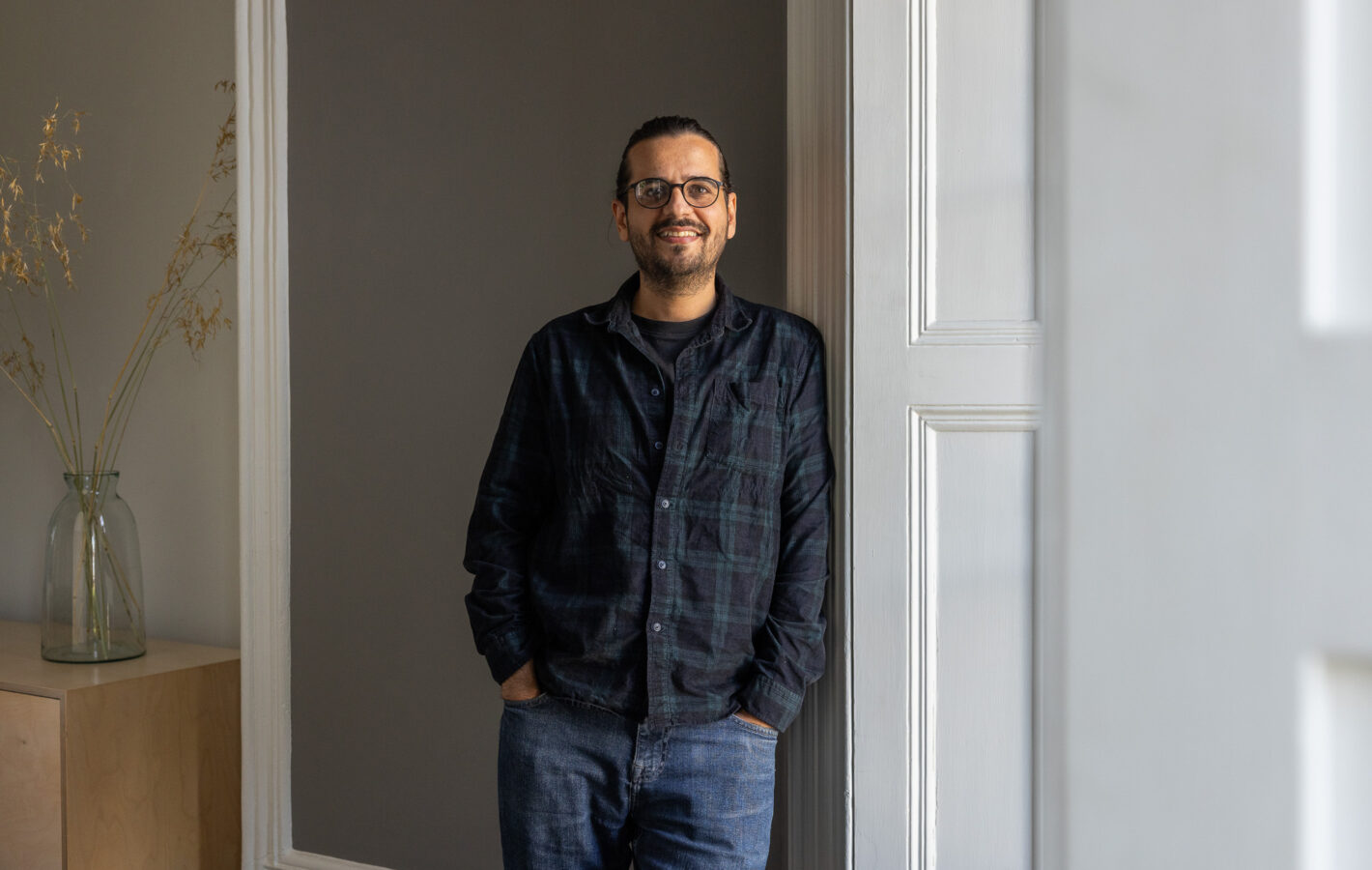
Habib is a Social Impact Researcher based at our Cardiff studio. He focuses on socially transformative design — exploring how design and wider practices shape one another to drive sustainability and energy efficiency.
By championing co-design and new ways of learning, he’s helping us move towards professional practices that are more responsive to participation and social change. His work is driven by an interest in the ethics of architectural practice, examining how questions of responsibility, participation, care, and accountability are negotiated through everyday design decisions.
Currently working on the development of our Impact Analysis programme, he’s drawing on learning from past projects to inform and improve our practice — reframing our reflective research as a way to record living, breathing ecosystems of human interaction.
What’s your take on the direction of travel for social impact research?
I think our growing awareness of the intertwined complexities of contemporary life has made us more conscious of the consequences of our actions. In line with this, I see a growing tendency to move beyond the measurement and estimation of impact towards a more participatory, evidence-informed and accountable form of practice.
Within this shift, research becomes an essential means of tracing impact and connecting outcomes back to the decisions and actions that shaped them. In doing so, it can support continual learning and help us improve how we design, how we work with people, and how we respond to wider social and climate challenges.
Tell us about a recent research piece that captures the kind of work you care about.
Our work at Gwynfaen, through our partnership with Cardiff University, connects directly to a line of inquiry I have been developing for some time.
My PhD began by exploring how design can shape actions and collective agency, and how that might open up possibilities for retrofit and, more broadly, for better ways of living. In my postdoctoral research, I was able to widen that lens and look at some of the systems surrounding those decisions, including the ways finance can shape retrofit practices and choices.
At Gwynfaen, those questions are very tangible. Rather than looking only at energy meters and technical performance data, we are focusing on everyday human experience — how people actually live within these low-carbon homes, how the design supports or constrains them, and where difficulties may emerge.
Tell us about a moment of positive impact in your career — the kind that made you think, ‘this is why I do my job.’
I rarely think of impact as something I make by myself. The kind of research I do often becomes a translation device. It is a way of encountering different worlds, experiences and forms of knowledge. It draws on what all participants bring to the process.
The most rewarding moments are when I can see a piece of my research becoming part of a larger apparatus that brings different ideas and understandings closer together, creates new connections, and helps to initiate change.
So far, my work has contributed to efforts addressing the complex challenge of retrofitting homes, where design, policy and personal agency meet. Seeing research help connect those different perspectives, and become part of a wider process of change, is what I find most rewarding.
