Walk through Pixel on any given day and you might see a ceramicist throwing clay, a musician teaching a student the piano, or a filmmaker editing their latest cut. Dotted around the building, people stop to chat in the corridors, hang out over a coffee, or settle into an evening life-drawing class.
This is the atmosphere we hoped for when we set out to design the three-storey creative workspace at the top of Penzance’s historic shopping street, Causewayhead. But like any project, there are moments we could never have designed directly.
Here, Senior Architect Ed Houlton reflects on what’s emerged in the year since opening, and what those insights might mean for anyone commissioning or designing similar spaces.
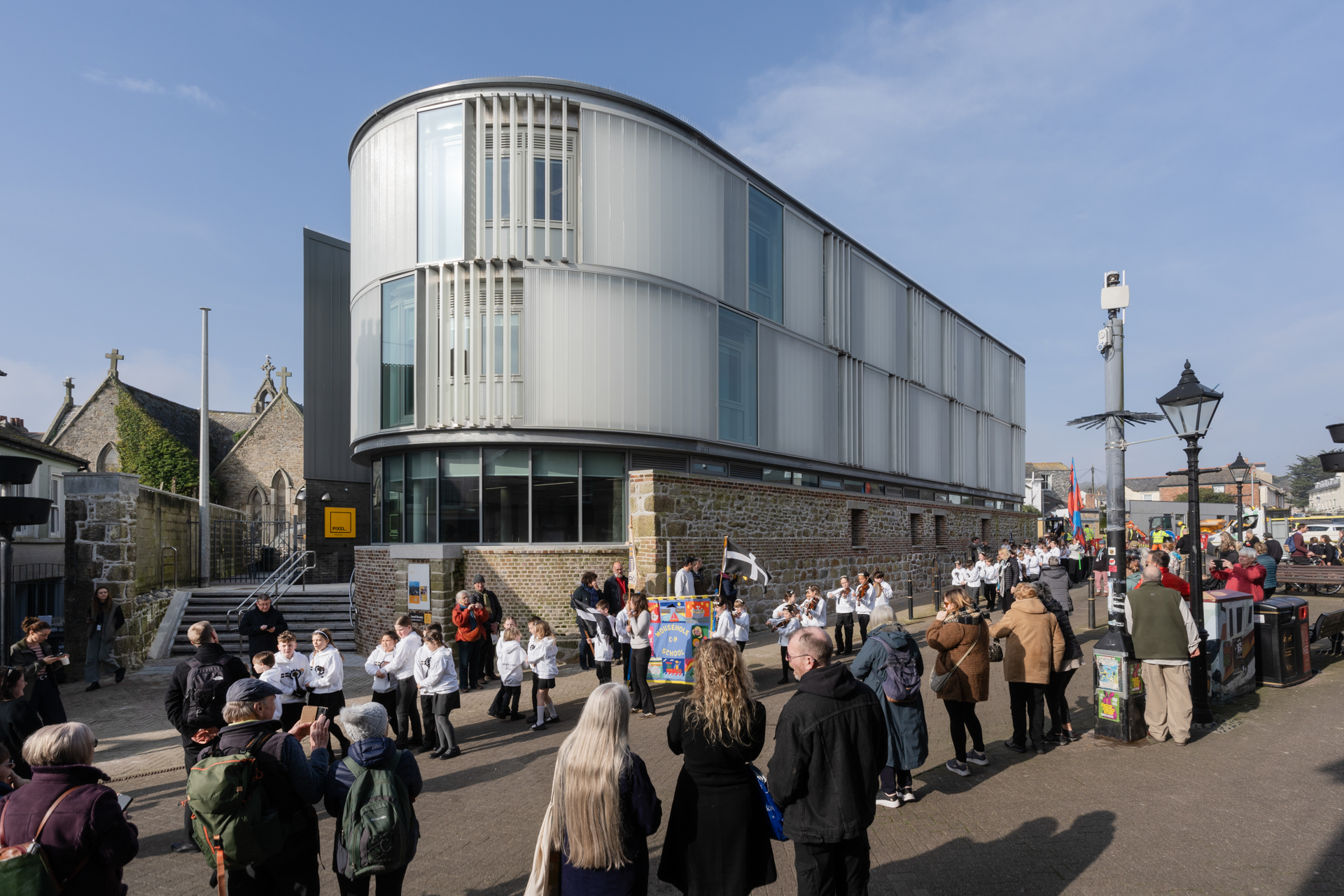
When we first picked up the brief, Cornwall Council recognised the need for something beyond the typical retail and leisure offerings—a building that could bring new energy to Causewayhead and act as an early catalyst for Penzance’s wider regeneration.
With that, we approached Pixel as a building that needed to do two things well. First, offer a blank canvas that brings together a diverse community of makers and creatives. Second, stand as a contemporary landmark that signals confidence about the town’s future.
Having spent time with many of the tenants at Pixel as part of our Inhabitant series, it’s interesting to reflect on how those two ambitions have played out.
Creating comfort and connection
One of the strongest themes from the interviews was how social the building has become. People spoke about friendships forming between neighbours, kitchen chats that spark ideas, and collaborations emerging between businesses. Several described feeling “part of something” in a way that had been missing from working at home.
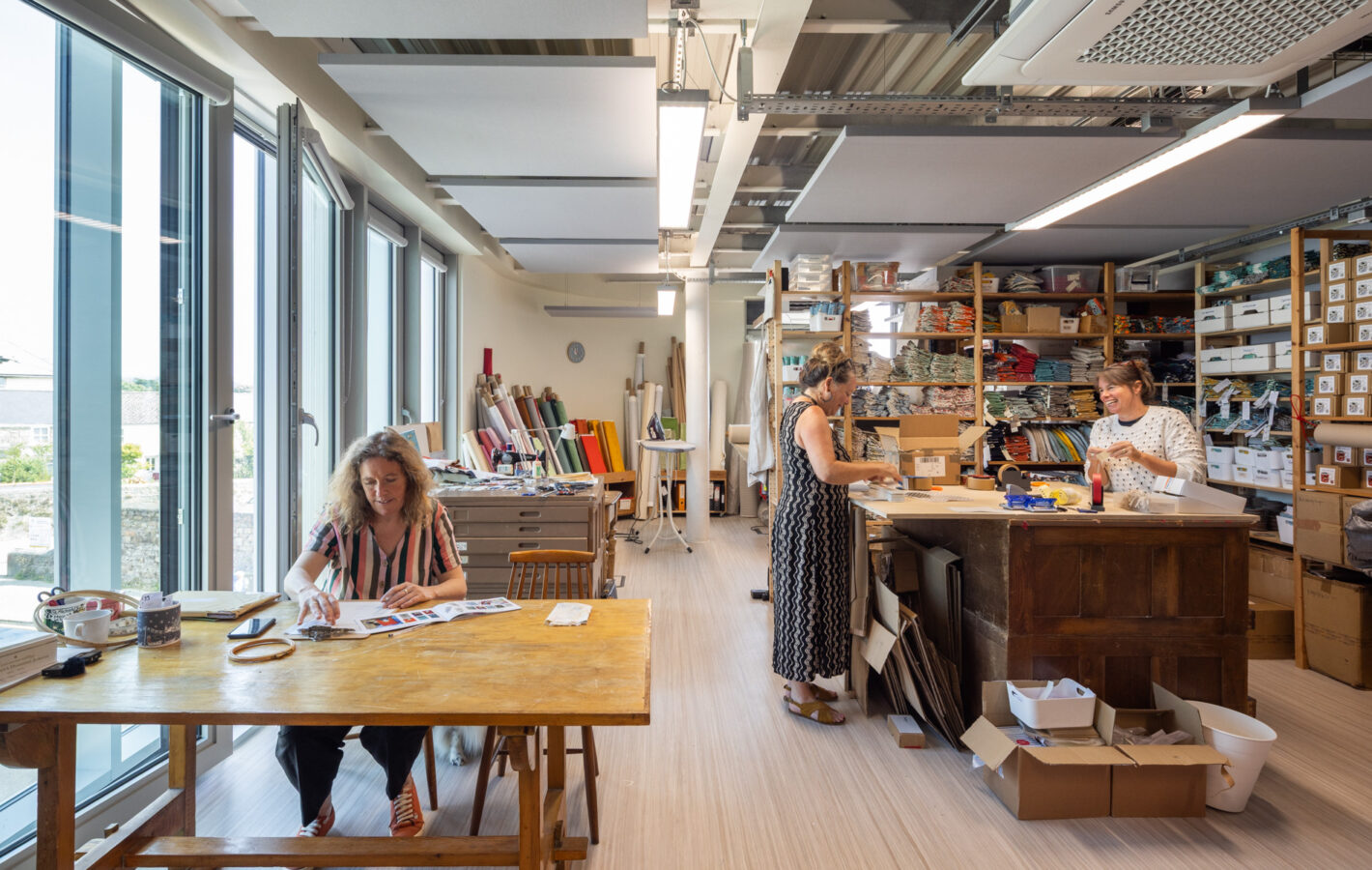
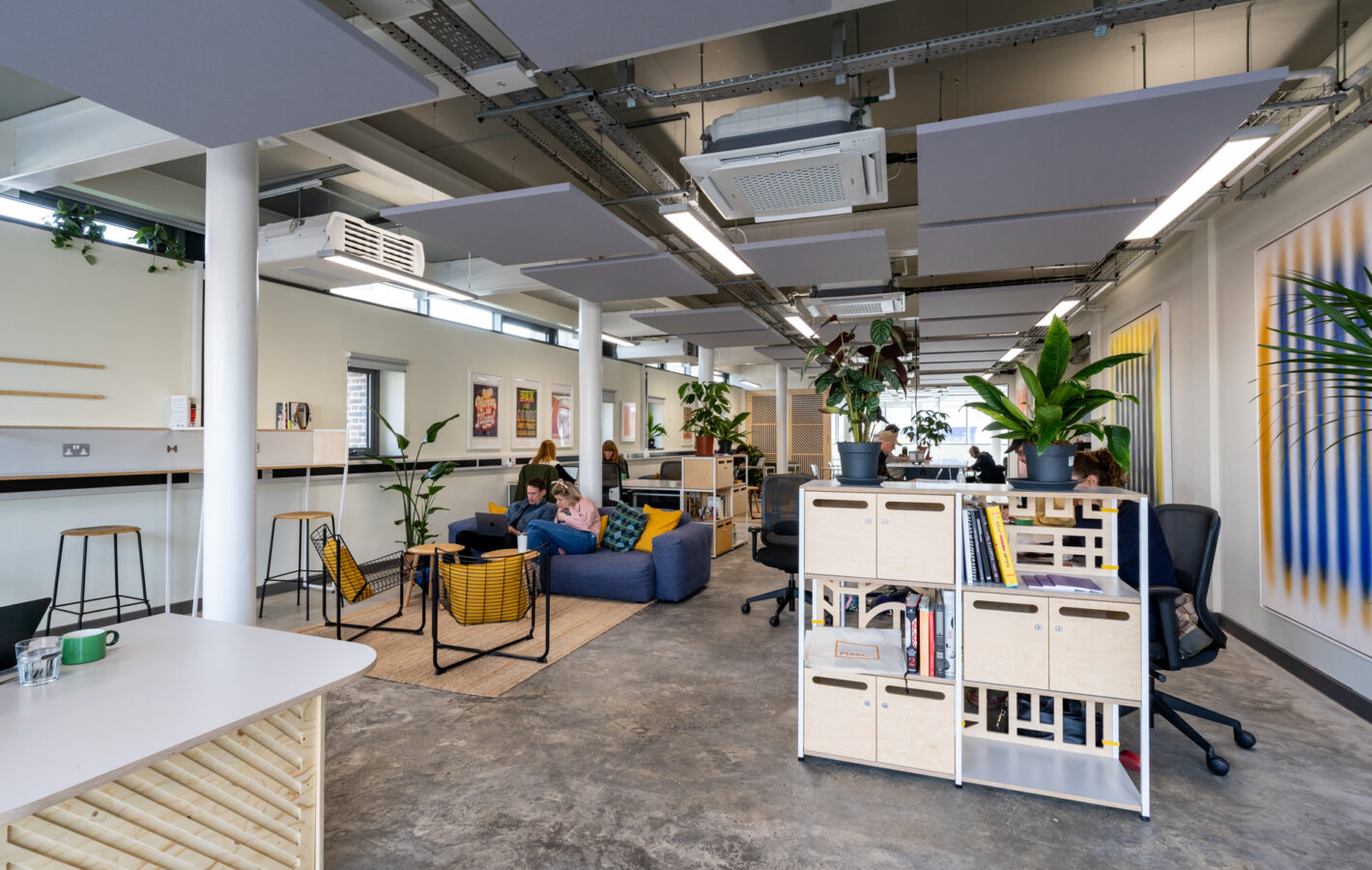
For me, there are two catalysts for this, but they only work in tandem: the design and the building’s management. On the former, the corridors are generously sized and naturally lit at both ends, so they feel comfortable to pause in rather than simply pass through. Each floor has its own kitchenette, encouraging chance encounters over tea or lunch. The ground floor co-working area sits behind a fully glazed frontage, so the activity inside is visible to anyone walking past. Even the private studios have small vision panels—just enough to see if someone is in while still allowing people to focus.
Individually, these decisions are modest, but together they create an environment where connection feels natural. What’s been remarkable though is how Forward Space, the team running Pixel, have built on those conditions and nurtured the daily life of the building with real care. Almost everyone we spoke to mentioned their generosity and attentiveness—the warm welcomes, the thoughtful events, the ease they create for newcomers—which has created a culture that really brings people together.
You can see that comfort play in other ways too, like in how confident people feel about making the space their own. Guitars hang from hooks, sinks have been added, and walls lined with plywood for shelving. One tenant said they love that the building “can be adapted and made messy.” That comment delighted me—this isn’t an office building. It’s a place for making things.
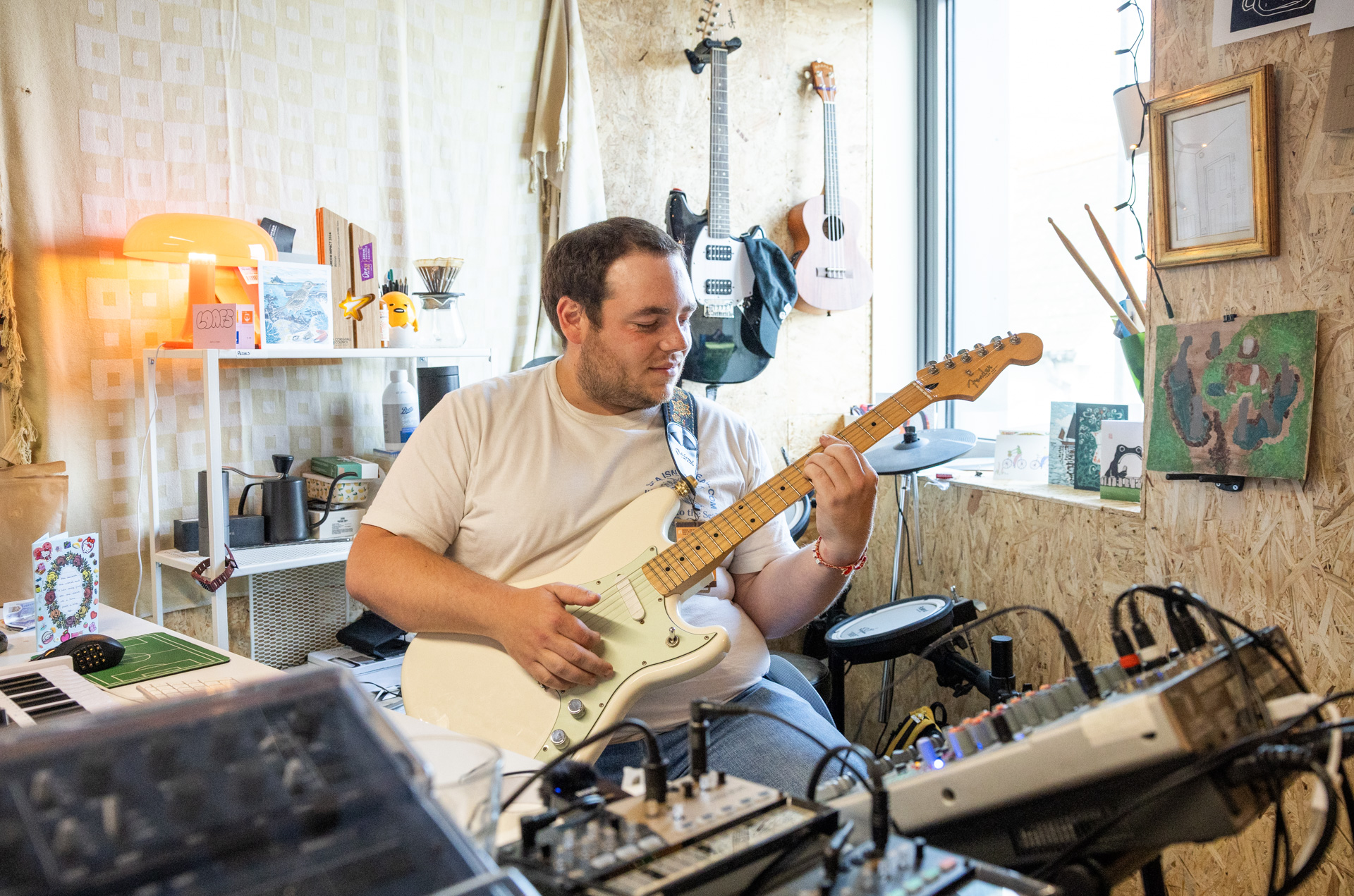
For us, this feels like having a room in a house we can’t afford yet—somewhere we can make a mess, make noise, and fill the walls with work that inspires us. We keep pushing to see where the boundary is, but they’ve said yes to everything so far.
Linus Firth, Archaeologist at Pixel
The building doesn’t dictate how it should be used. It creates a framework, and then gets out of the way. The result is that each studio has developed its own character—an expression of the people and businesses that occupy them. Walking through Pixel now, you get a real sense of the diversity of creative work happening under one roof.
Bringing in the operators
Looking back, I wish we could have involved Forward Space even earlier—though that’s always a challenge with a project like this, with many years of design and planning before an operator could realistically commit.
What that meant is that during the design process, we shaped the space based on our experience of similar projects and the brief as it stood, rather than alongside the people who’d eventually be running it. We didn’t have the depth of insight that would have come from visiting other Forward Space buildings or understanding their approach to community-building, and their arrival brought a much richer understanding of how Pixel would actually be used: how people arrive, how often they gather, what helps them feel settled, and how a sense of community is encouraged.
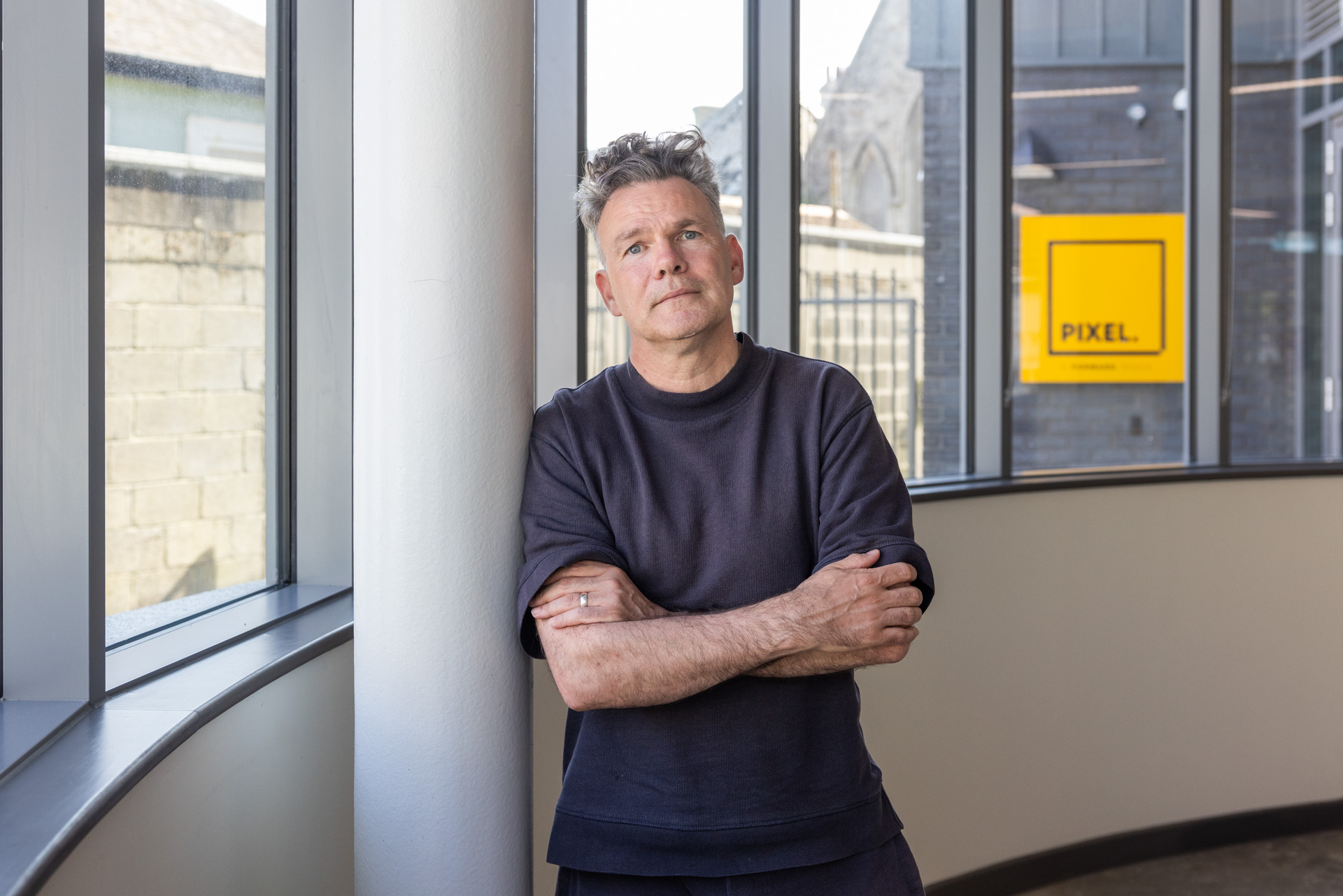
The staff are amazing. They make you feel like they’re part of the same company as you. For example, we suggested shorter meeting room bookings—the next week, half-hour slots were added. Hundreds of little things like that.
Ben Miller, Content Designer at Pixel
Someone at Forward Space mentioned they might have suggested a single shared kitchenette, for example, rather than one on each floor to concentrate social activity. Whether tenants would want to carry drinks up and down stairs is debatable, but it’s exactly the kind of conversation that becomes possible once an operator is in place.
This isn’t a criticism of the process we went through—it’s just a recognition that the people who run a building have enormous influence on how it lives and breathes, as is so evident here.
Changing perceptions across Penzance
From the outset, we designed Pixel to honour the site’s history while standing as a bold expression of positive momentum for the town.
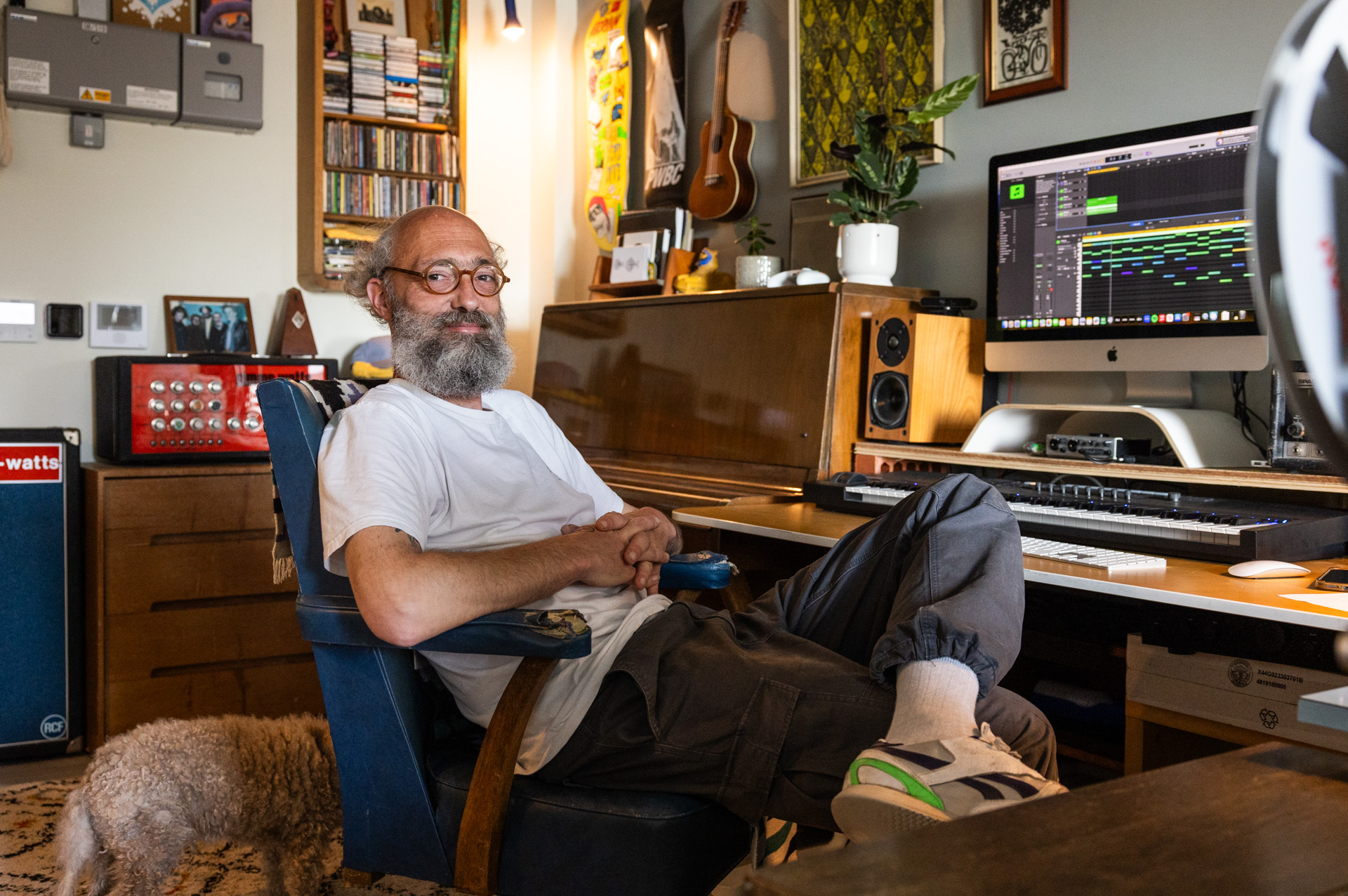
When I was growing up here, the grown-ups were like, “Do yourself a favour mate, move away and live your life.” And I did. But now, it’s a different time. We can do anything from anywhere, but I think that’s sometimes forgotten down here. This building shows people you can create a job around the things you love. And you can do that right here in Cornwall.
Richie Crago, Musician and Educator at Pixel
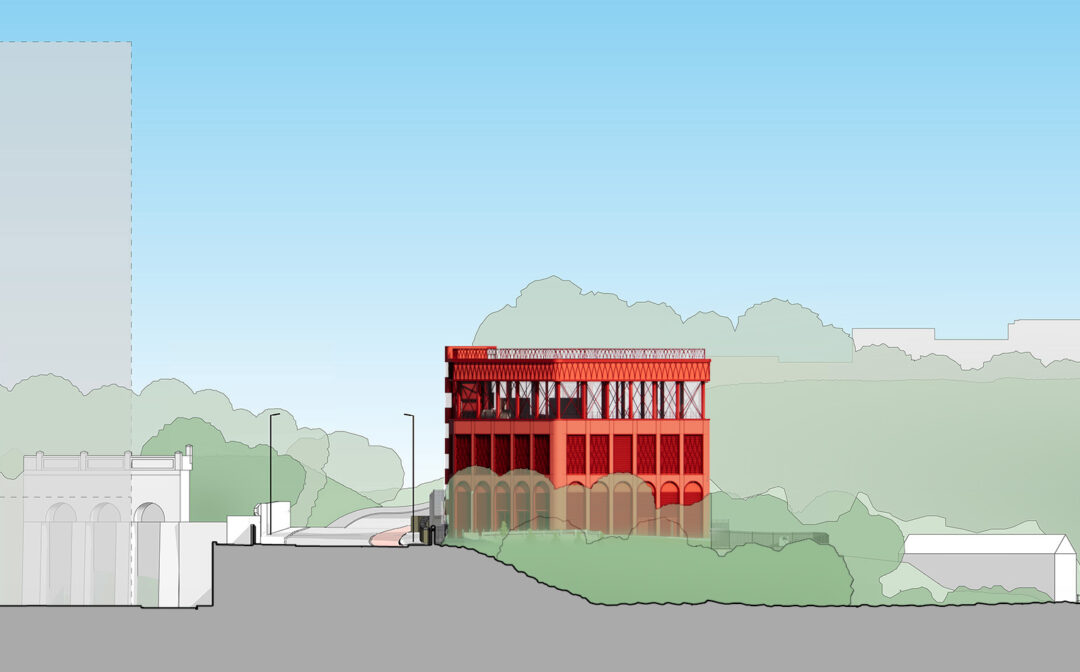
The boundary wall connects to what came before: the late 18th-century reservoir that once fed the town, the cattle market that followed, and more recently, the car park. We spent a lot of time getting the details right—reclaimed brickwork, punched window openings—to preserve that memory while giving the building its own identity. Even the building’s form references the reservoir beneath, with curved cladding on one side and an angular form on the other.
But that ambition came with risk. When the project went in for planning, there was pushback. People were concerned about losing parking spaces. Construction was delayed when the first contractor collapsed, which meant road closures went on longer than planned. And the building’s appearance felt unfamiliar to some. Those reactions were understandable.
What has been encouraging is how perceptions have shifted. As local people have been invited inside—by tenants, for events, for exhibitions—the building has stopped being about an unfamiliar form and started being about local people doing creative work and trying new things. Several tenants mentioned that the same people who criticised the building during construction now ask for tours. One spoke about how their neighbours at the garage, the greengrocer, and the chemist now recognise them as being “from Pixel.”
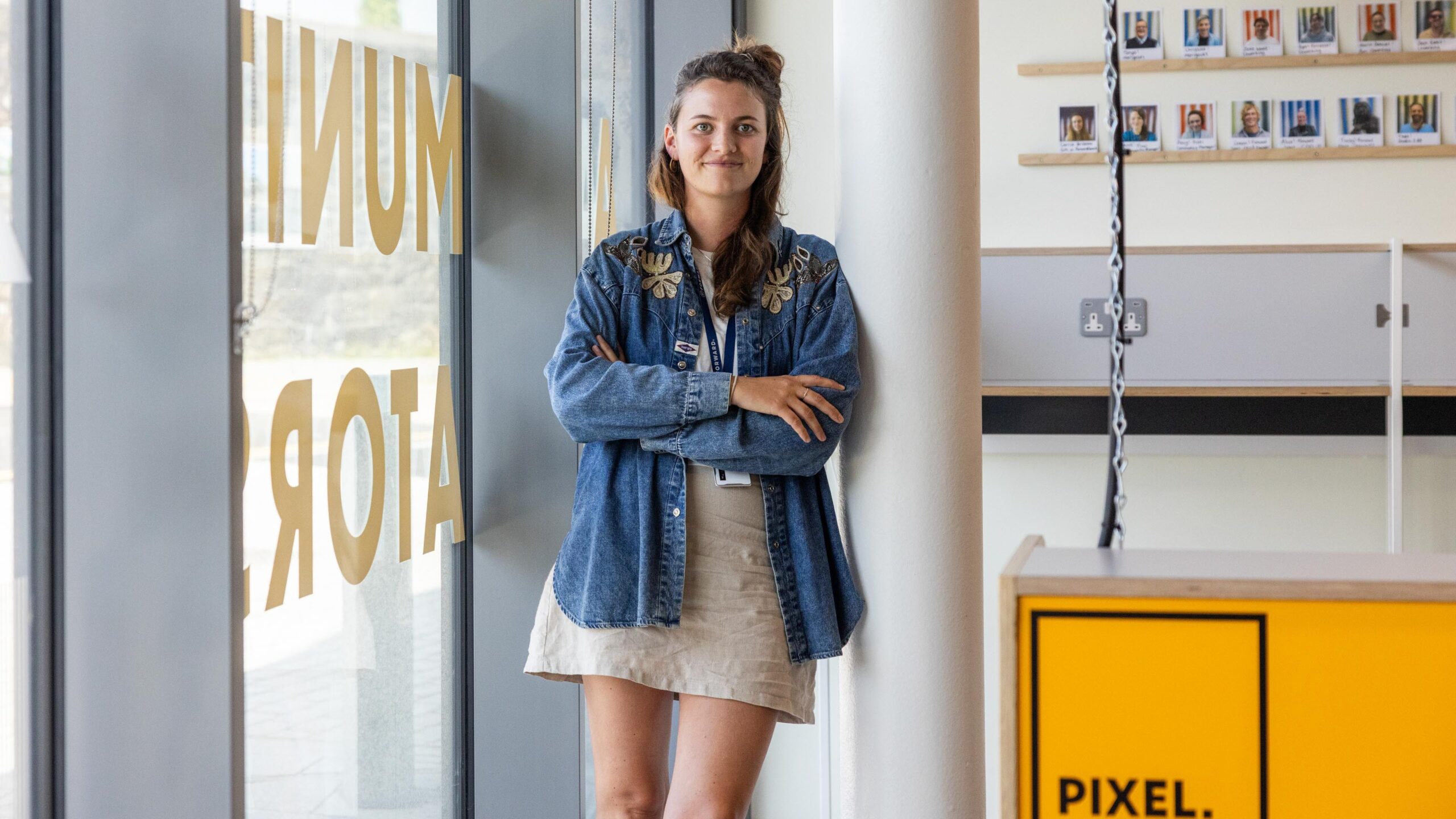
I think Penzance has been crying out for this. People have been craving it. You can just tell people want to be invited to things and want to talk and want to meet people. It’s such a nice thing to be part of and to see it growing.
Maisie Blackburn-Scott, Community Manager at Pixel
The connection with Penwith College has been especially positive. Games and Media students have exhibited their end-of-year work in the co-working gallery space, bringing families and students through the door and giving young people a glimpse of creative careers in the town.
Regeneration doesn’t happen overnight, but these small interactions add up. You hope there’s a positive economic impact on the town, and there’s certainly a growing sense that something positive is taking root—and that it’s being built for the long term.
It’s the people that make a place
Hearing tenants talk about their experience of Pixel has reinforced many things we already believed and introduced new perspectives.
We’re more confident than ever in the value of designing with flexibility, natural light, transparency, and moments of social encounter in mind. In this context, generous corridors, communal kitchenettes, vision panels, and the glazed frontage that invites people in have all proven their worth.
But the clearest affirmation for me is about the importance of the relationship between architecture and operations. We can create the physical conditions, but it’s the people who bring them to life. Forward Space’s commitment to building community, and the tenants’ willingness to make the space their own, have transformed what could have been just another creative hub into something with real energy and purpose. Long may it continue.
Meet the creatives who call Pixel home to discover how craft, culture and community have thrived in Penzance. Explore Inhabitant.