Progress for University of Bath’s new wellbeing-led, Passivhaus student village
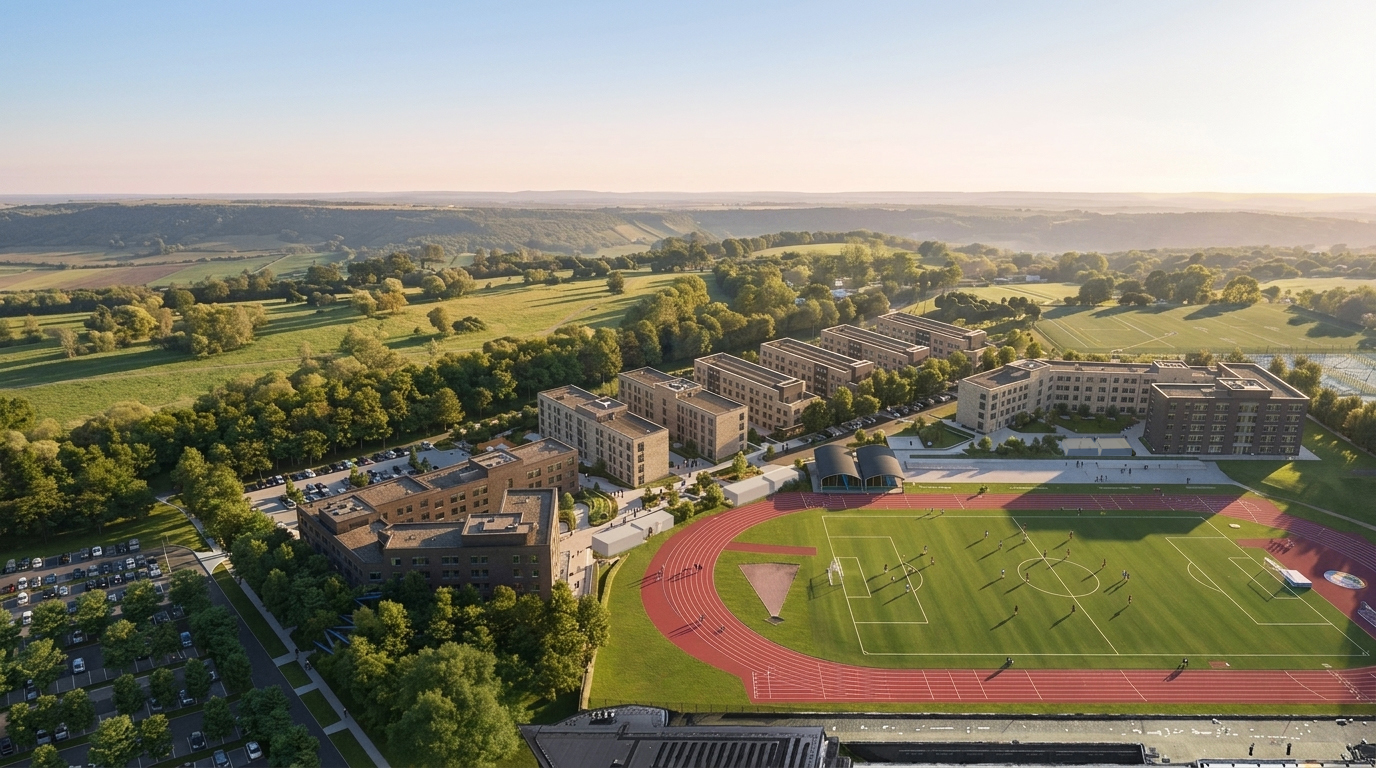
We’ve secured resolution to grant planning approval for a new, 926-bed Passivhaus student living development at the University of Bath’s Claverton Campus.
Situated at the campus edge surrounded by nature, the development is designed to look and feel like a contemporary village that sits naturally within its woodland home—all whilst achieving incredibly high carbon efficiency.
It’s a project defined by the client’s progressive wellbeing and sustainability agenda—a place that is at one with the surrounding body of nature whilst promoting student wellbeing and encouraging social cohesion.
A woodland welcome
The project borders several significant sites, including the Cotswolds National Landscape, verdant Bushey Norwood, and the Bath UNESCO World Heritage site.
In response to these complex contextual constraints, our approach employed a simple logic: as you wander through the woods of Bushey Norwood, the development shouldn’t encroach upon the landscape, or the skyline. Instead, the student village gradually emerges through the trees.
To make this possible, we’ve kept the eight buildings to four or five storeys to ensure the development remains as invisible as possible from key local viewpoints.
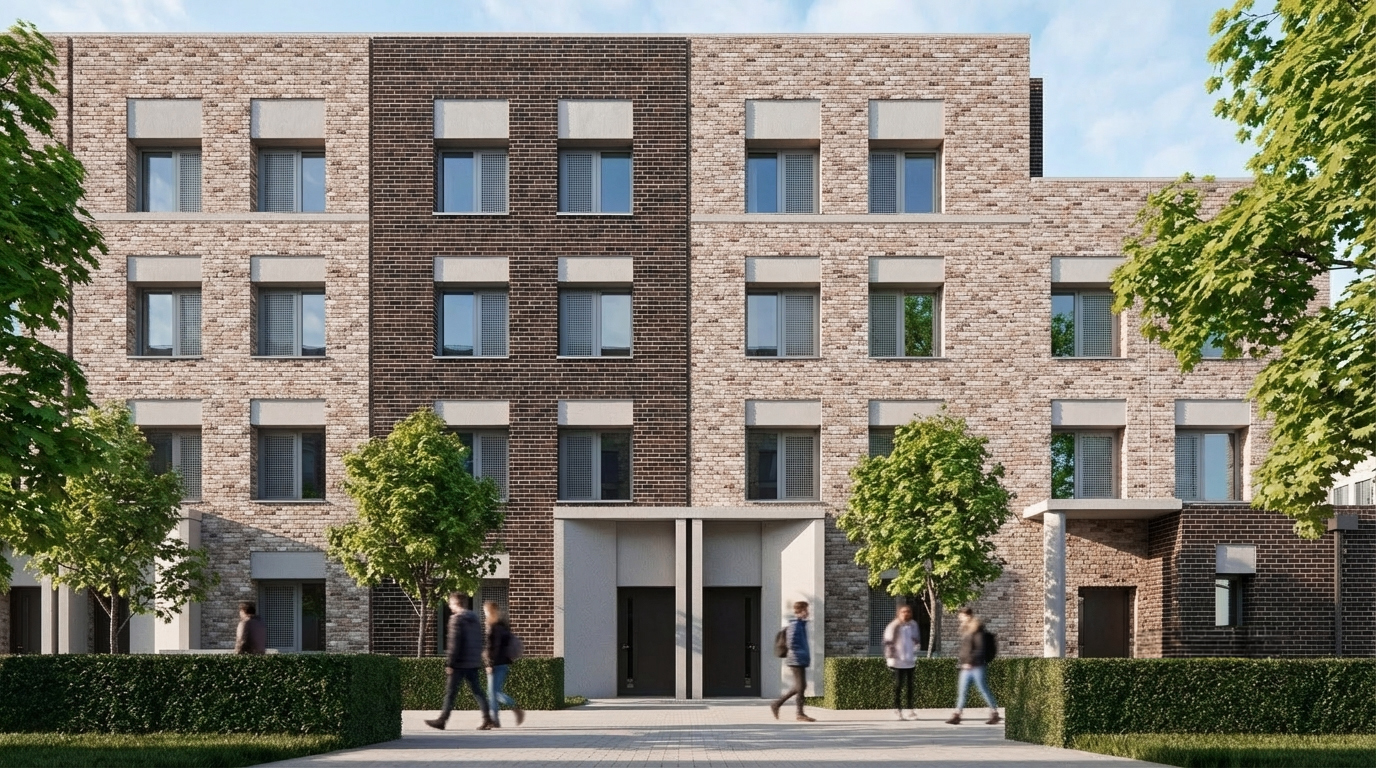
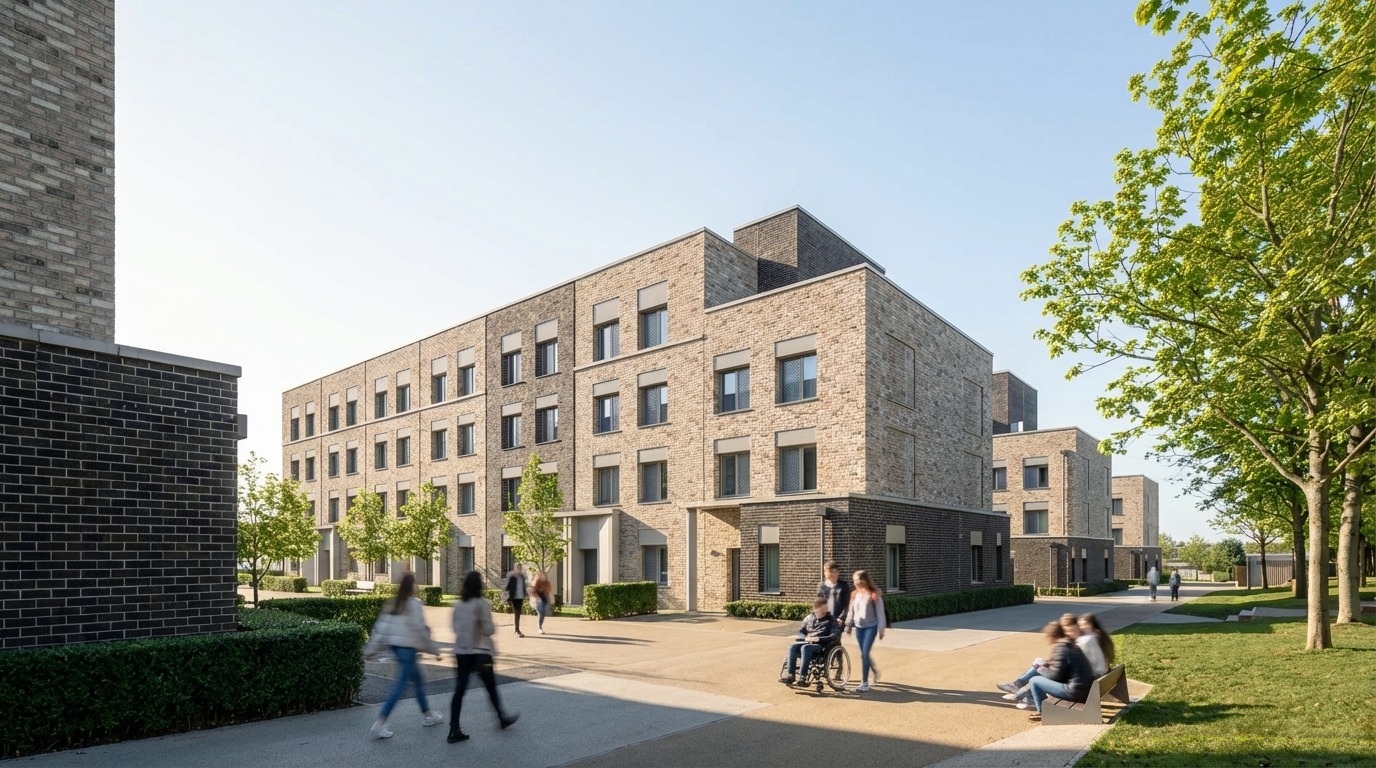
A palette of light-toned, textured brick, combined with subtle metal detailing and cast concrete arches, gives the buildings an earthy, grounded feel as you move through the site. It’s a pairing that evokes the soft beauty synonymous with the city of Bath, and the brutalist bones of the Claverton campus.
An evolution in sustainable student living
Driven by Bath & North East Somerset Council’s ambitious energy benchmarks, we’ve built on the experience gained from delivering UWE Bristol’s Purdown View—a landmark in Passivhaus student accommodation—to maximise performance.
With the support of our partners at ARUP, the new development is predicted to exceed Passivhaus standards, achieving an Energy Use Intensity (EUI) of 50 kWh/m² per year—a significant leap forward in energy performance for a project of this scale and use. Additionally, we’re targeting BREEAM Excellent.
Across the site, we’re retaining as many trees as possible, aiming to meet a 60% Biodiversity Net Gain target, and preserving the sense that the accommodation is nestled within the forest.
We’ve also taken extensive efforts to protect the active bat corridor on the site’s edge, with carefully placed windows and directional, low-level lighting maintaining the complex conditions the bats require.
Wellbeing, well above standard
Guided by the university’s progressive health and wellbeing agenda, we ensured that positive student experience drove every part of the design.
We began by delivering a programme of engagement that went above and beyond to ensure our design responds to what students, staff, and the public value most.
Equipped with those insights, we then set out to build on experience gained from our previous project with the university, The Quads—a Student Minds Exemplar scheme.
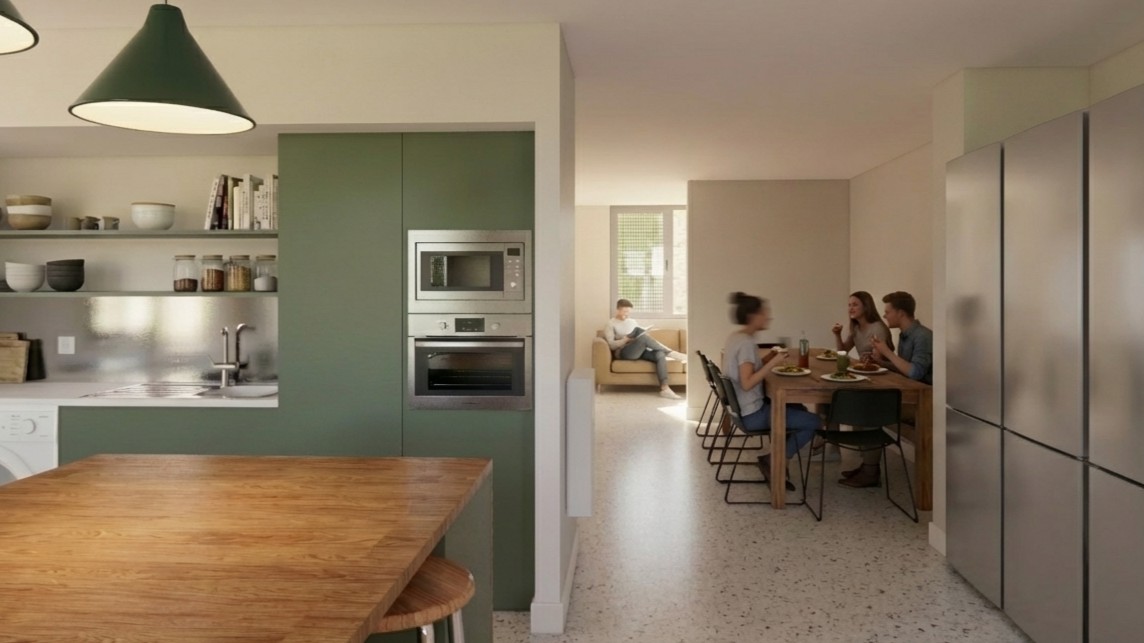
The result is a development that centres ease of interaction, bringing forward one of The Quads’ most successful innovations—shared social lounges that encourage students to build friendships beyond their immediate flatmates.
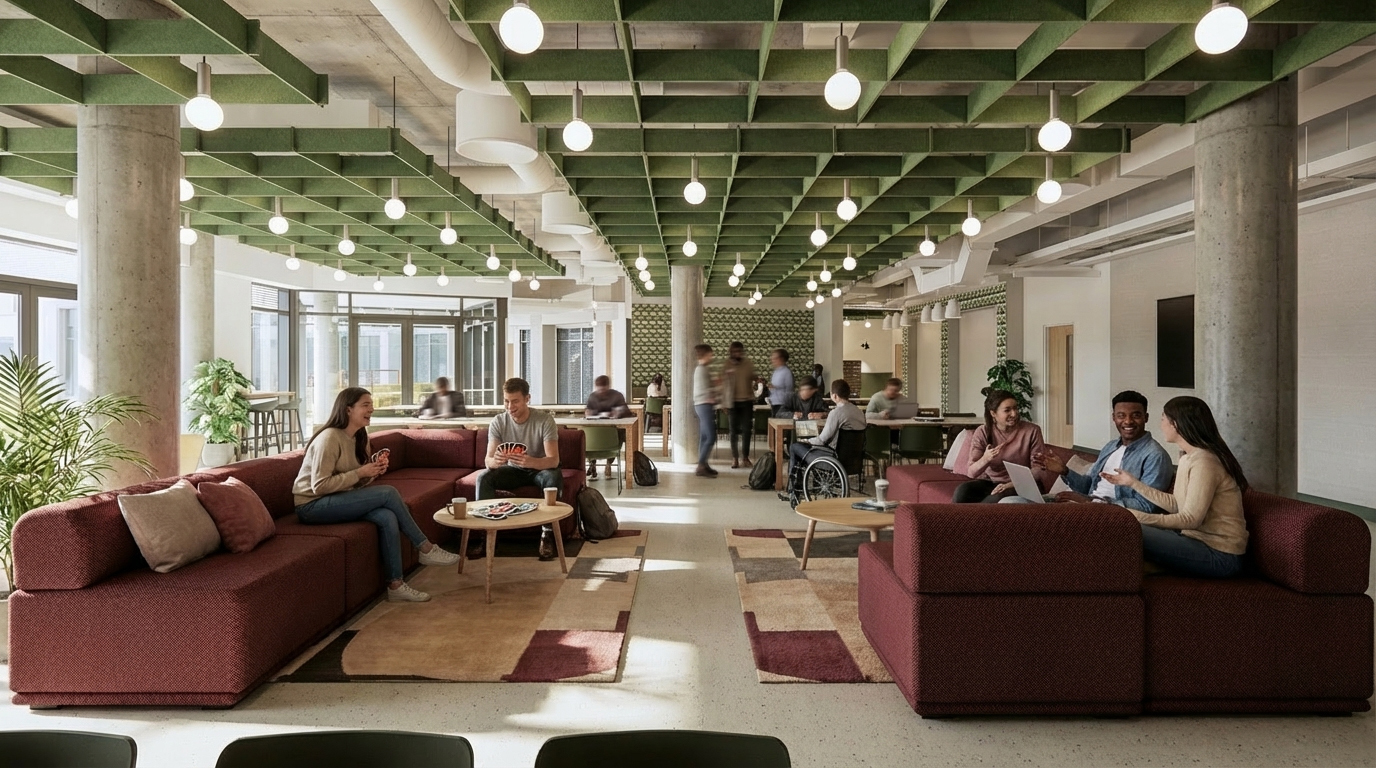
Accessible, adaptable, and affordable
Ten accessible rooms are spread across the development, whilst specially designed buffer zones between noisy social spaces and quiet study areas help neurodiverse students to more easily manage sensory shifts. Meanwhile, we’ve integrated stepless navigation and accessible parking throughout the site, keeping the village experience open to all.
To support varying budgets, we’ve introduced a four-storey townhouse model for a more affordable, communal style of living. These 12-bed units are all about creating a genuine sense of home inside and out by maximising opportunities for students to connect with both their environment, and their peers.
To achieve this, the townhouses feature a shared kitchen and living space on the ground floor, with bedrooms and shared bathrooms spread above, and homely private gardens outdoors.
A collective effort
The project has been a collaborative effort between our Architecture, Landscape Architecture and Interior Design teams. We’d also like to thank our partners at Define, JLL, ARUP, Mann Williams, Fulkers Bailey Russell and emesen for their support. The team is currently working with Graham Construction during the pre-construction phase.
To find out more about our work with universities across the UK, why not chat with Matt Tarling at AUDE 2026?