Bath Road Energy Centre
Powering a fossil-free future for Bristol
The Bath Road Energy Centre will play a vital role in Bristol’s aim to become carbon neutral. Once complete, the building will generate 13MW of heat to the emerging Bristol Temple Quarter neighbourhood—enough to supply the equivalent of over 7,000 homes with low carbon, reliable heating and hot water.
A catalyst for a cleaner city
Developed by Vattenfall Heat UK, the building will be part of the Bristol heat network—an energy system that aims to heat over half of all Bristolians living, working, and learning in the city by 2050. The city will benefit from a shared central energy system, removing the need for individual gas boilers and dramatically reducing emissions.
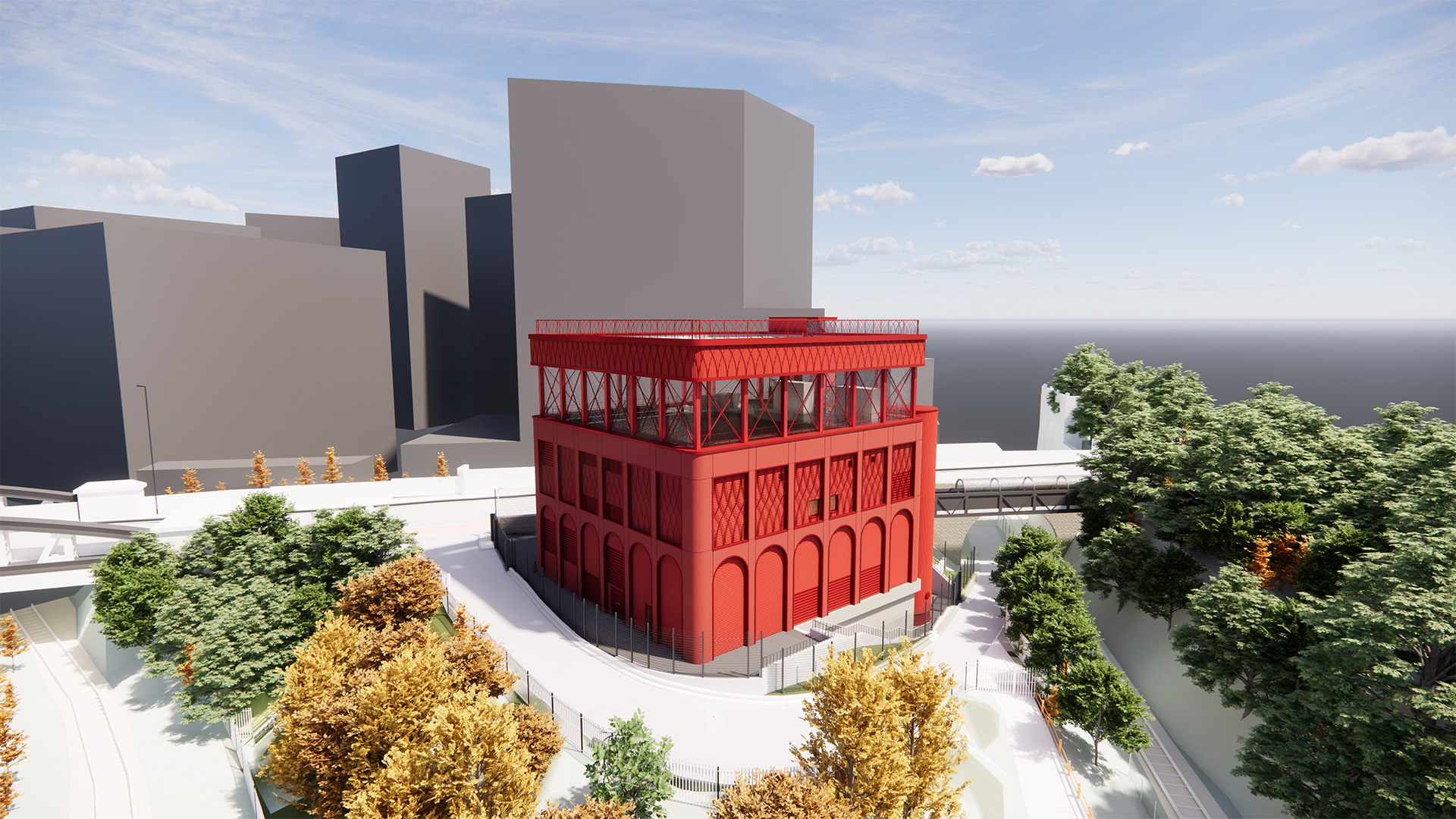
Located near Bristol Temple Meads train station, the Bath Road Energy Centre will provide low carbon heat to new homes, education buildings, and workplaces across Bristol Temple Quarter.
How it works—and what it saves
Industrial-scale air source heat pumps (ASHPs) extract thermal energy from the outside air and use it to heat water, which is then circulated through a network of underground pipes to buildings across the city.
Compared to traditional heating methods, a modern gas boiler typically operates at around 90% efficiency, whereas ASHPs can produce more than twice the energy they consume.
Once operational, the new energy centre could cut local carbon emissions by up to 7,400 tonnes per year—the equivalent of taking 3,700 diesel cars off the road.
A beacon of purpose and presence
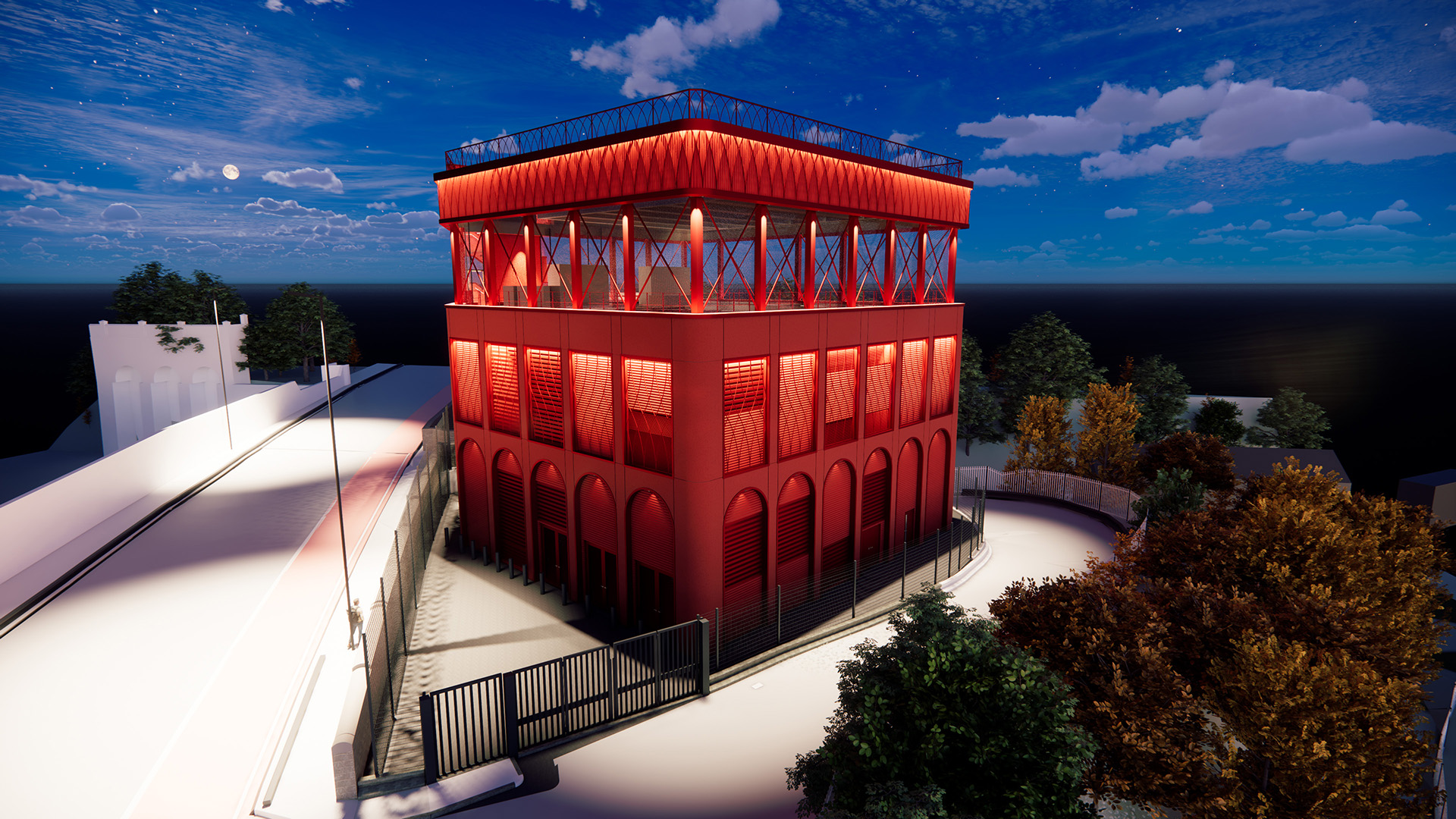
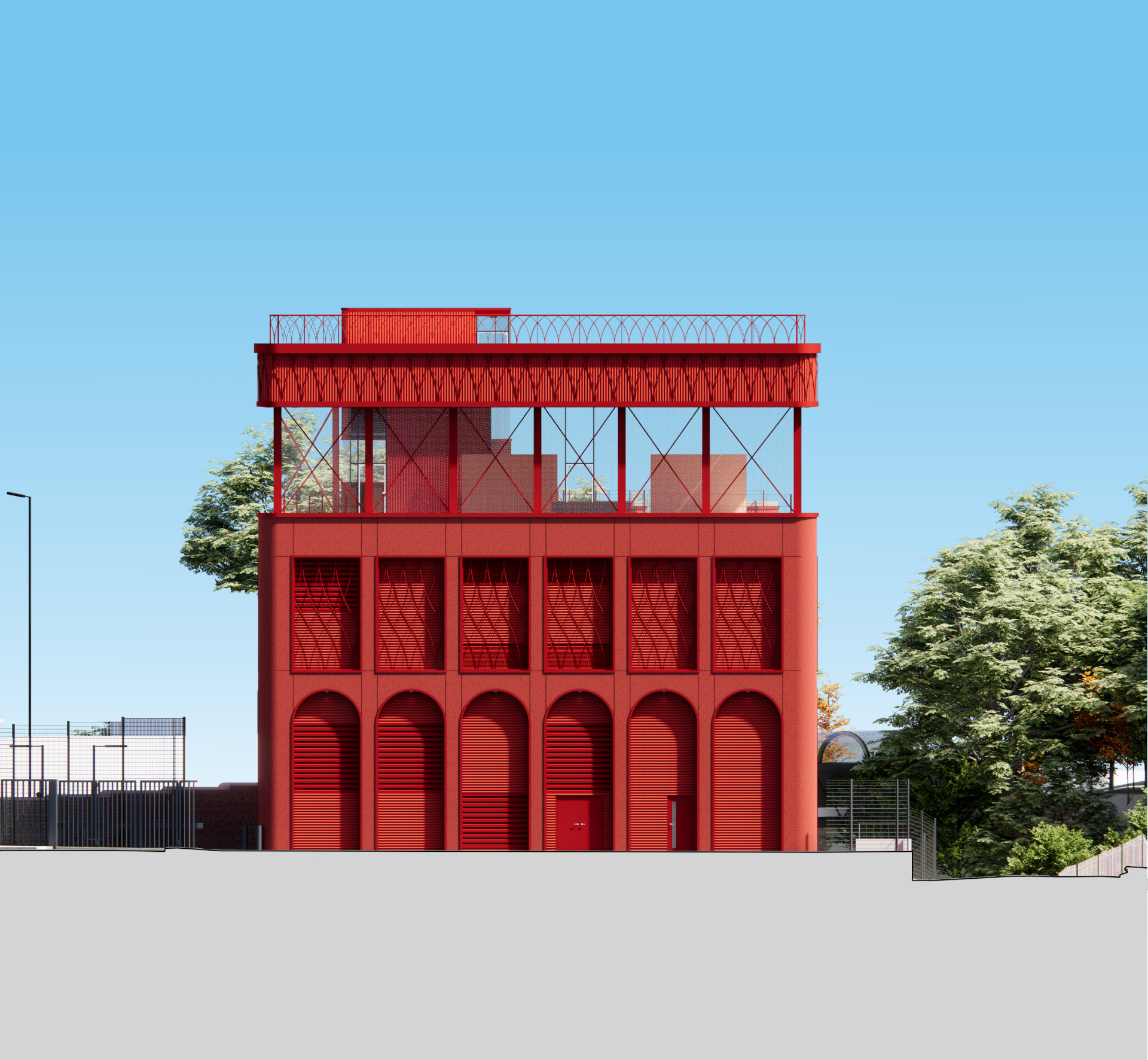
While function led the design, the building is a new typology for Bristol and is intended to be an elegant piece of civic industrial architecture that celebrates its purpose.
Inspired by Bristol’s industrial heritage and Byzantine architecture, the facade’s arches and vertical rhythms echo local vernacular forms while giving the building a strong contemporary identity.
We chose materials for their performance and durability, but also to give presence to this essential piece of infrastructure. The ribbed GRC panels catch light and shadow to enliven the building’s surface, while a decorative lattice motif introduces texture, depth, and subtle movement—especially when lit at night.
