Cheadle Market
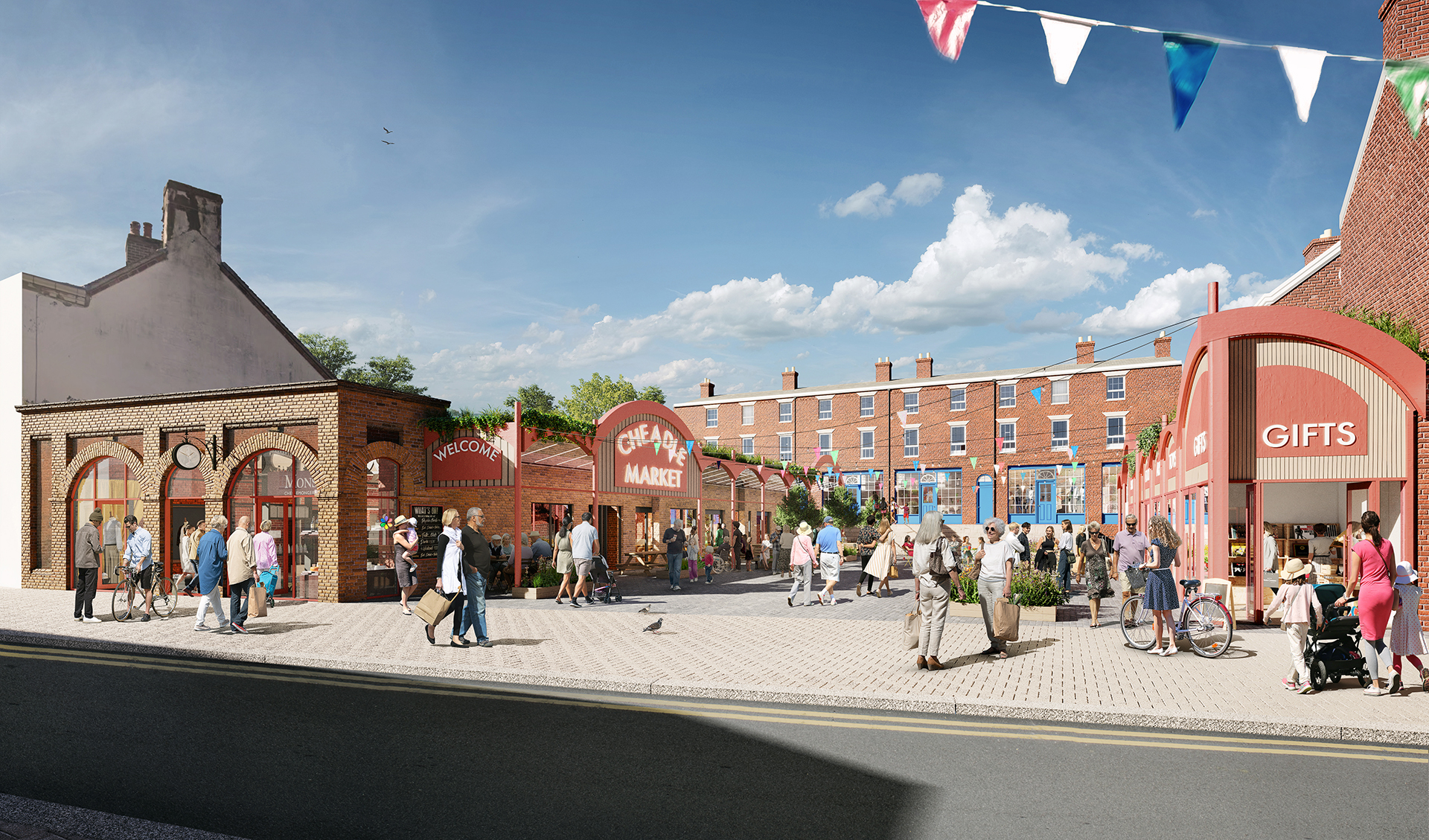
A retail-led renaissance for the butcher, baker, and artisanal candlestick maker
Long before same-day deliveries and identikit retail parks, markets were the commercial and communal heart of UK towns. None more so than in Cheadle, Staffordshire, with its period architecture, tight-knight community, and market town status dating back to King Henry III.
From its heyday of hosting everything from horse trading to theatre productions, processions, and parties, the market today tells a different story. Weekly outdoor traders kept it ticking over, but by the time the council bought the site in 2024, the main hall had no heating, poor ventilation, and inadequate toilets — an unwelcoming space that struggled to attract shoppers.
Back to the future
The council’s goal is to kick-start local economic development by giving the market a new future—one that draws people to the high street and gives Cheadle a focal point to evolve around. Together with market specialist Esther Worboys, we hosted surveys and interviews with local residents to understand what people actually wanted.
Their feedback was straightforward. The vast majority just wanted a better version of what was already there. Somewhere to shop, hang out, host events, and buy locally made products—in a place that feels their own. In many ways this wasn’t surprising. Although the commercial offering of town markets might have changed, the role they play in smaller communities hasn’t.
Playing into Cheadle’s charm
Framed by a Georgian terrace at the rear, the square sits just off the high street, but feels disconnected from it. The core idea is to make the hall and square work as one space, give the site a greater presence, and reconnect the market to the town’s wider fabric.
A new canopy runs along one side of the square, taking design cues from the market hall’s Victorian cast iron frames. On the opposite side, lightweight retail units reactivate the square’s historic layout, giving independent traders flexible spaces to set up shop and build a customer base.
Inside the main hall, we’ve reorganised the hall around food, drink, and local produce, with indoor seating and an arcade area that references the original design. The materials and approach are grounded in that historic context—respectful of the site’s past, but without disguising what’s new.
Too many small towns have seen their high streets become a monotony of bookies, barbers, and chain stores. A market built around independent traders—people doing things they care about, in the place they care about—is one way to push back against that.
Gareth Mason, Associate Director, Stride Treglown
