
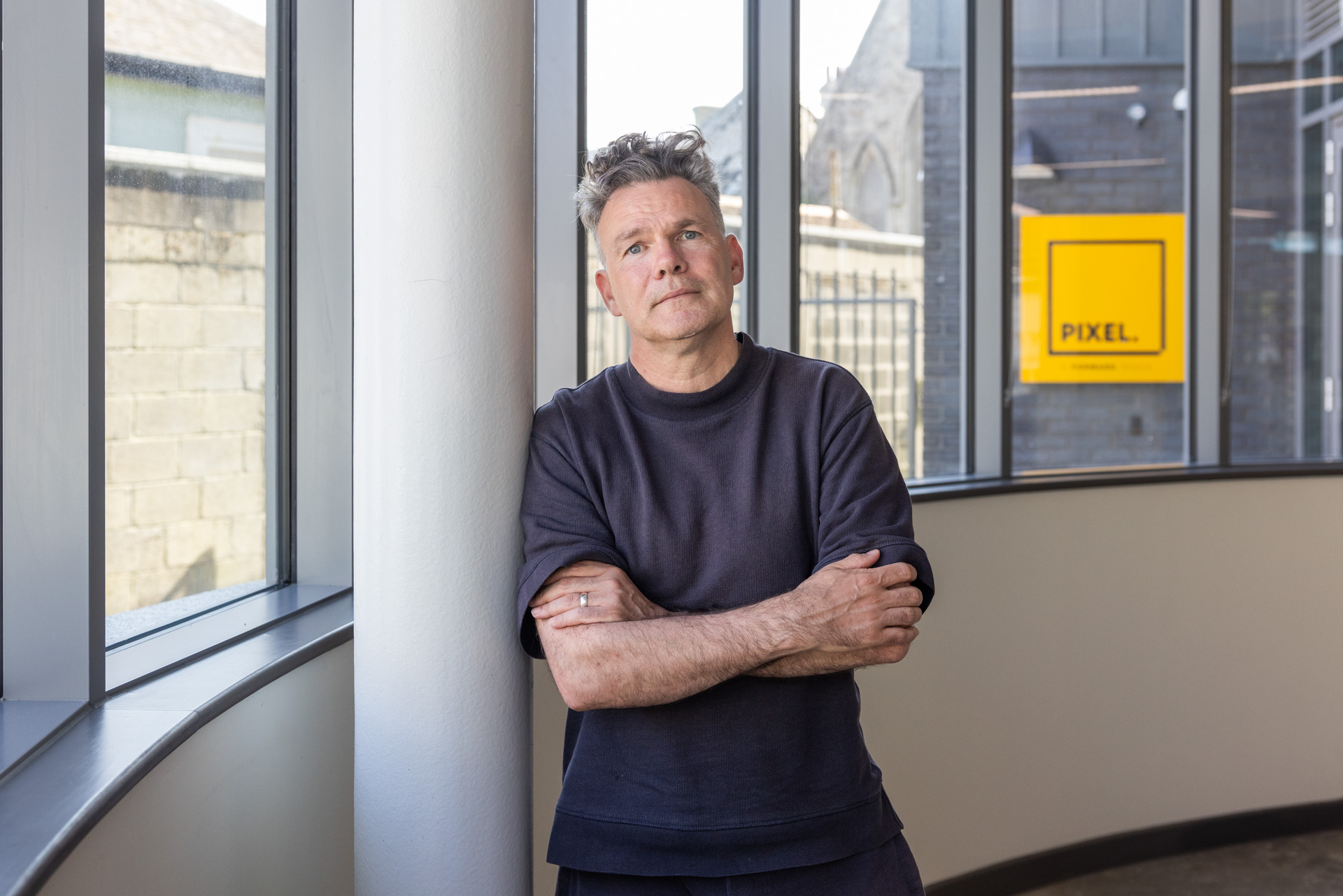
Benjamin Miller is a content designer who writes the words that guide people through apps and digital platforms. At Pixel, he works remotely for a healthcare technology company, enjoying the balance of focused work and quiet community.
Benjamin, can you start by telling us what you do here?
I’m a content designer, or UX writer, which means I write the text that appears on screens in apps or mobile applications.
I work full-time for a fully remote company, mostly with outpatients for hospitals, so it’s writing for things like text messages, letters, or questionnaires. Basically, I decide things like whether we’ll say “good morning”, “good afternoon”, “hello”—or whether we’ll leave it blank altogether.
And what brought you to Penzance?
My Dad’s from here, so I always knew I’d end up here one day. I didn’t grow up here, but I’ve visited once or twice a year for fifty years. My wife and I came here on holidays, so I know it quite well.
And what brought you to Pixel?
I live across the road, so I heard about it a couple of years ago and was one of the first to move in.
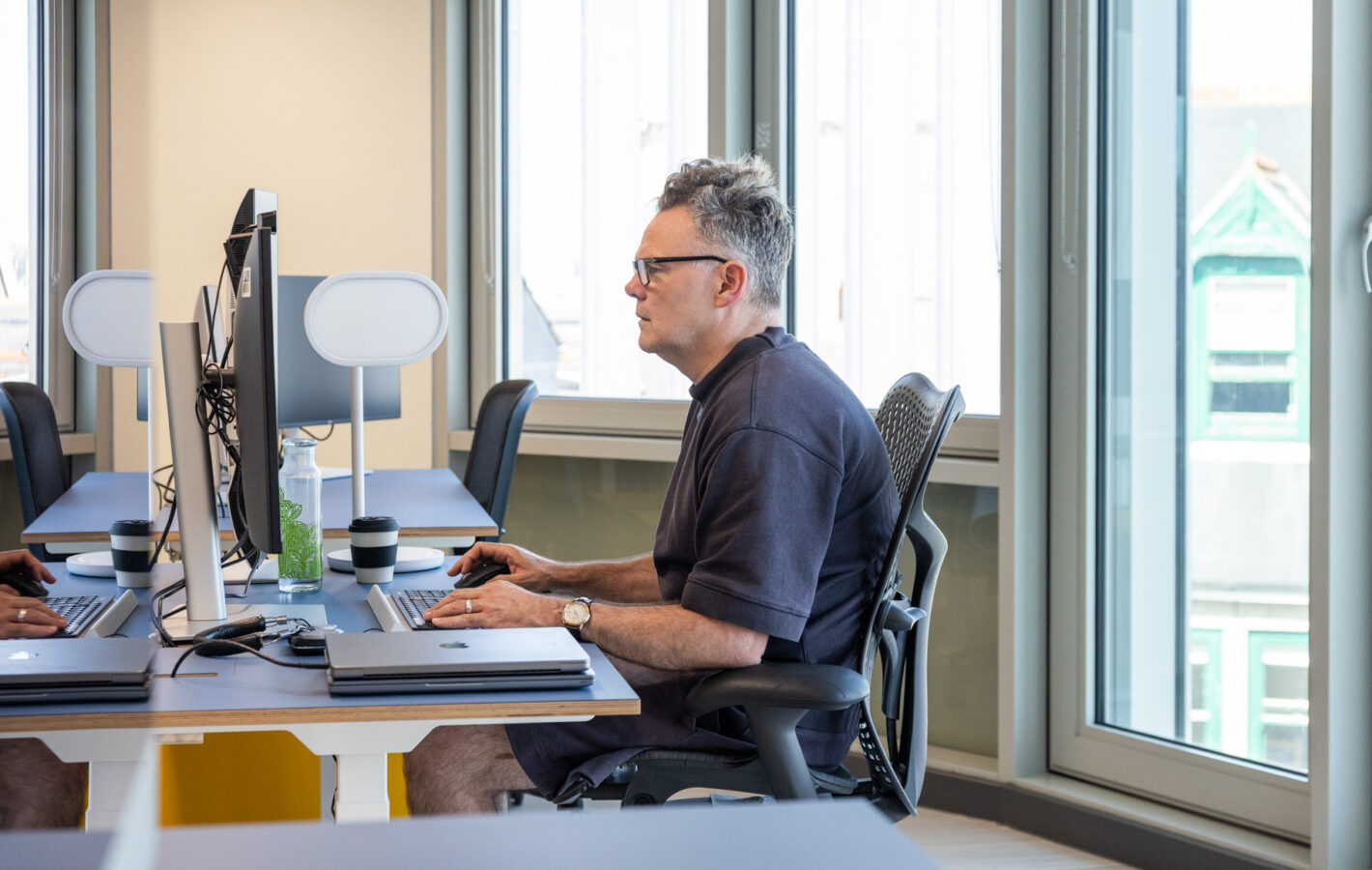
Working from home, video calls are fine, but I didn’t get much from them emotionally. Especially in winter when it rains most days, I’d go days without leaving the house. Maybe a quick shop or a trip to the pub, but otherwise not much. I just needed a change of scene.
My wife’s an artist and we used to share a workspace in Redruth, which is a 40–50 minute drive away. So we came here for practical reasons. We don’t have much space at home, and this was the most affordable way for me to move my work out of the house.
Now I can nip home for lunch or a quick cup of tea with my wife. It’s practical being in the centre of town—close to shops, easy to walk everywhere.
How has working here changed how you work?
There’s a big social benefit—I feel part of something, part of the town. It takes me a while to get to know people, but seeing the same faces helps. There’s also a small creative benefit: a few conversations here have shaped how I think or work. I wouldn’t overstate it—it’s not that corridor-startup thing people imagine, but there’s value there.
I used to work for Google and they really emphasised public spaces for spontaneous ideas, but I think that’s sometimes overplayed. Creativity comes from process, not just bumping into people.
Still, the kitchen moments here are nice. I mostly use the one upstairs but I like coming down, it changes your perspective. I’m not the most social person, but I do try to come to events when I can.
And how are you finding the social balance?
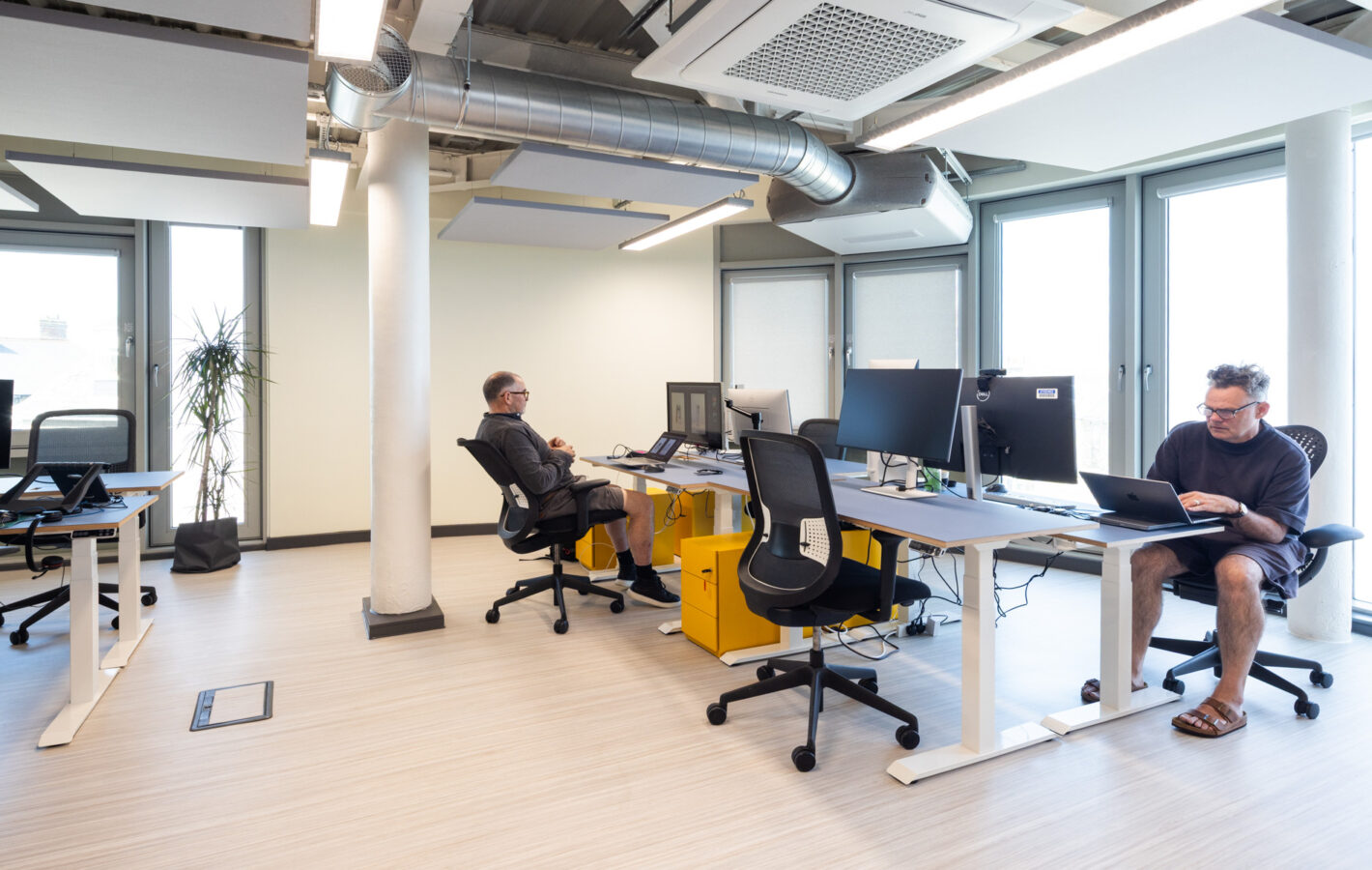
It’s a good middle ground. There’s a relaxed atmosphere, it’s not like people are high-fiving all the time. You can tell who’s up for a chat. A nod becomes a smile, then a “hi”.
I sometimes come down to take calls, or if I’ve run out of meeting room credits. Seeing familiar faces makes the place feel safe and friendly. I think people are curious too—they like knowing who’s around. The social interaction here was actually the biggest surprise for me. I came for the space to get out from under my wife’s feet, but it’s been the community that’s had the most impact.
Has anyone in particular stood out or surprised you?
It’s nice hearing what people around you are working on. I find Zoe’s work the most interesting—I’ve worked in creative industries all my life, but I actually find ecology more interesting than, say, designing a font. She’ll be talking about badgers on a call and I’m all ears.
Richie’s great too, I find him quite inspirational, and I see him around town as well. Just knowing who he is makes the place feel more connected.
And the staff are amazing. Carrie, Maisie, and Polly are friendly, proactive, and make you feel like they’re part of the same company as you. For example, we suggested shorter meeting room bookings—the next week, half-hour slots were added. Hundreds of little things like that.
As someone who lives down the road, how do you feel about the building in general?
Some locals complained about the lights, especially when they change or animate at night. It’s not often, though. I think when it first opened, they were testing the settings.
As for the building itself, I find it odd that people judge a building by its façade. Architecture articles always lead with an exterior photo, but for me, it’s the inside that matters—how it works for people.
I don’t mind the outside. It’s a mix of materials—some new, some old—a bit of brick, a bit of stone. It used to be a car park, and I can’t believe people still say, “It’s a shame about that car park”, especially when there’s another across the road.
How have your neighbours reacted to it?
Mixed, to be honest. Some love it, others less so, probably depending on how far down the road you live.
I like seeing a new building. It’s good to see something fresh at the end of the lane. It feels like a positive change for the town. We have lots of heritage stuff, cafés, and bakeries, and I think this is really useful for a lot of people. Most of my neighbours feel the same. They want Penzance to have real jobs, not just tourism and hospitality.
Do you feel like the town’s getting the investment it needs?
I do, yeah. Things are changing. Towns ebb and flow—sometimes you’re the cool end, sometimes you’re not. Penzance is always shifting, but it’s nice to see this area developing.
It’s a shame Joel’s off this week—the Round House has the best coffee and bread in Penzance. The gallery and Barton Books add a lot too. It’s a lovely little corner. Most days I don’t get much further than halfway up Causeway Head.
Appreciate your time, Benjamin. Lovely to hear how you’ve found your place here.
