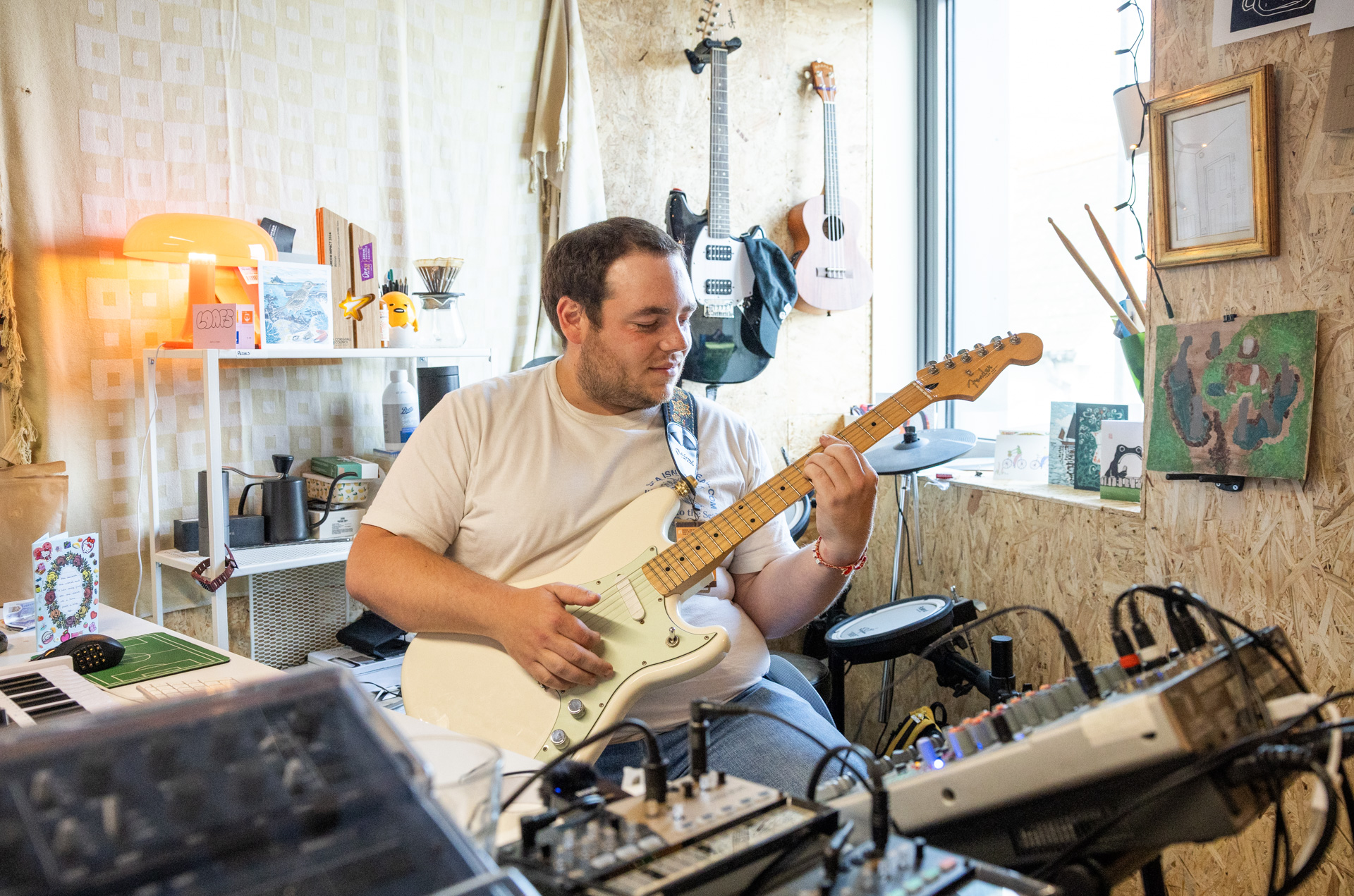

By day, Linus Firth is an archaeologist; by night and weekend, he’s a painter and musician. He shares a studio at Pixel with his partner, artist Charlotte Bradbury-Axton. Together, they use the space for their creative projects—and the occasional Cornish jig.
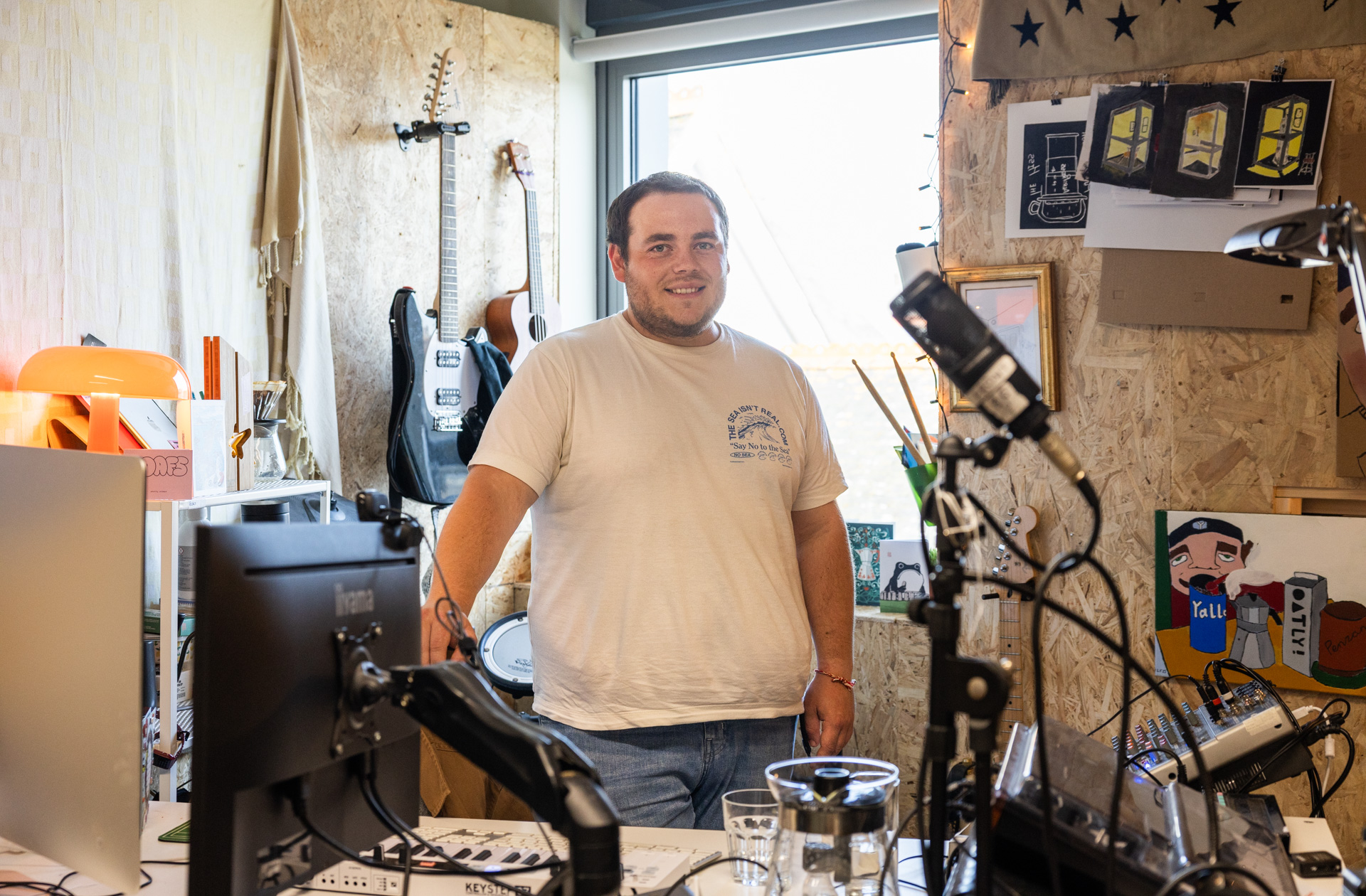
Can you explain a little about your space and how you use it?
I do my day job downstairs during work hours, then come up here in the evenings and weekends. Most nights, and pretty much all weekend, I’m painting or making music—sometimes with friends, sometimes just Charlotte and I.
I do most of my work here at the desk or on this wall, and Charlotte has her side. For us, this place is like having a room in a house we can’t afford yet, a space where we can make a mess, make noise, and fill the walls with work that inspires us. We hang out, drink endless cups of tea and coffee—and a few beers on Fridays.
What inspires your creative work?
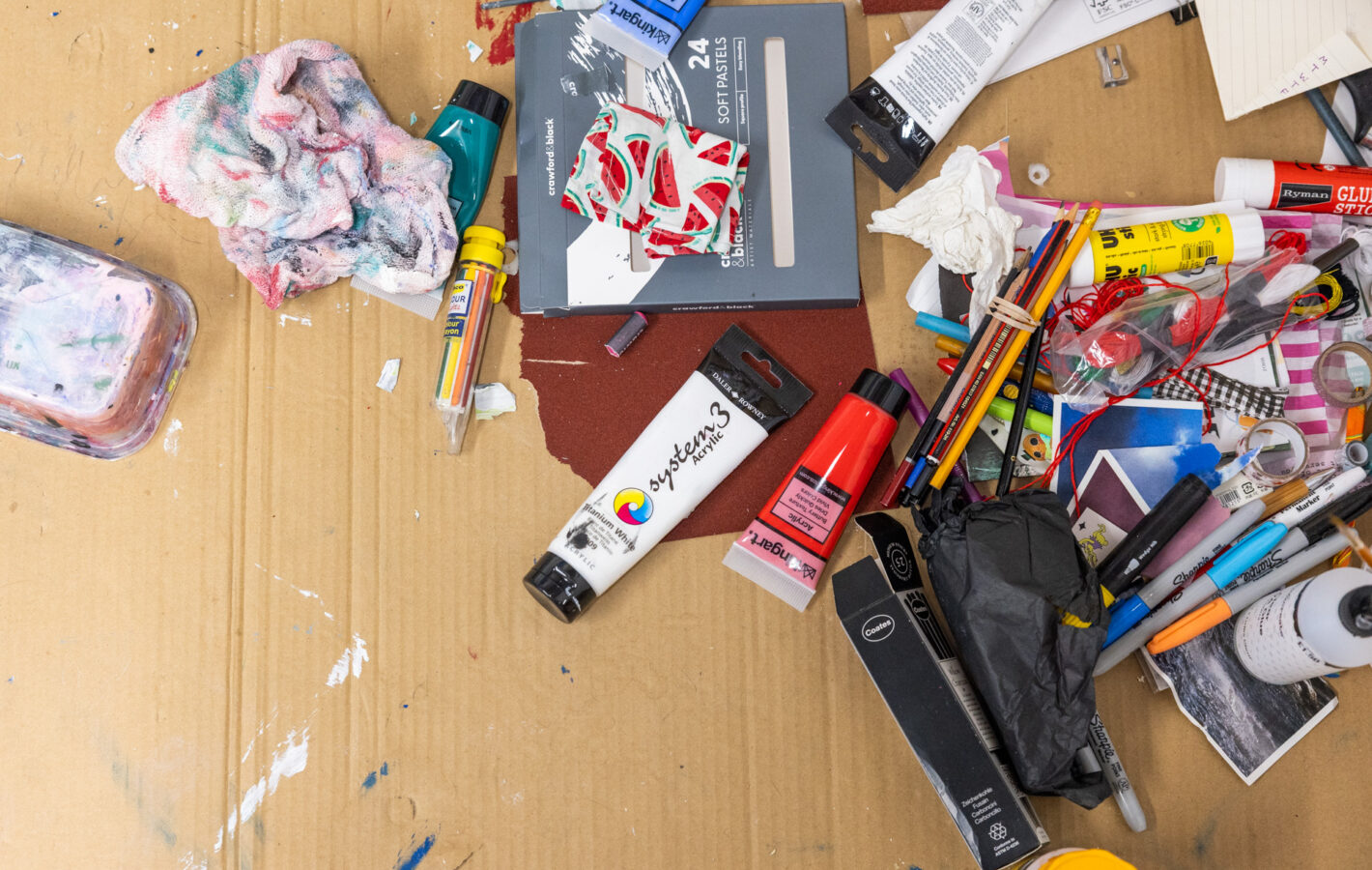
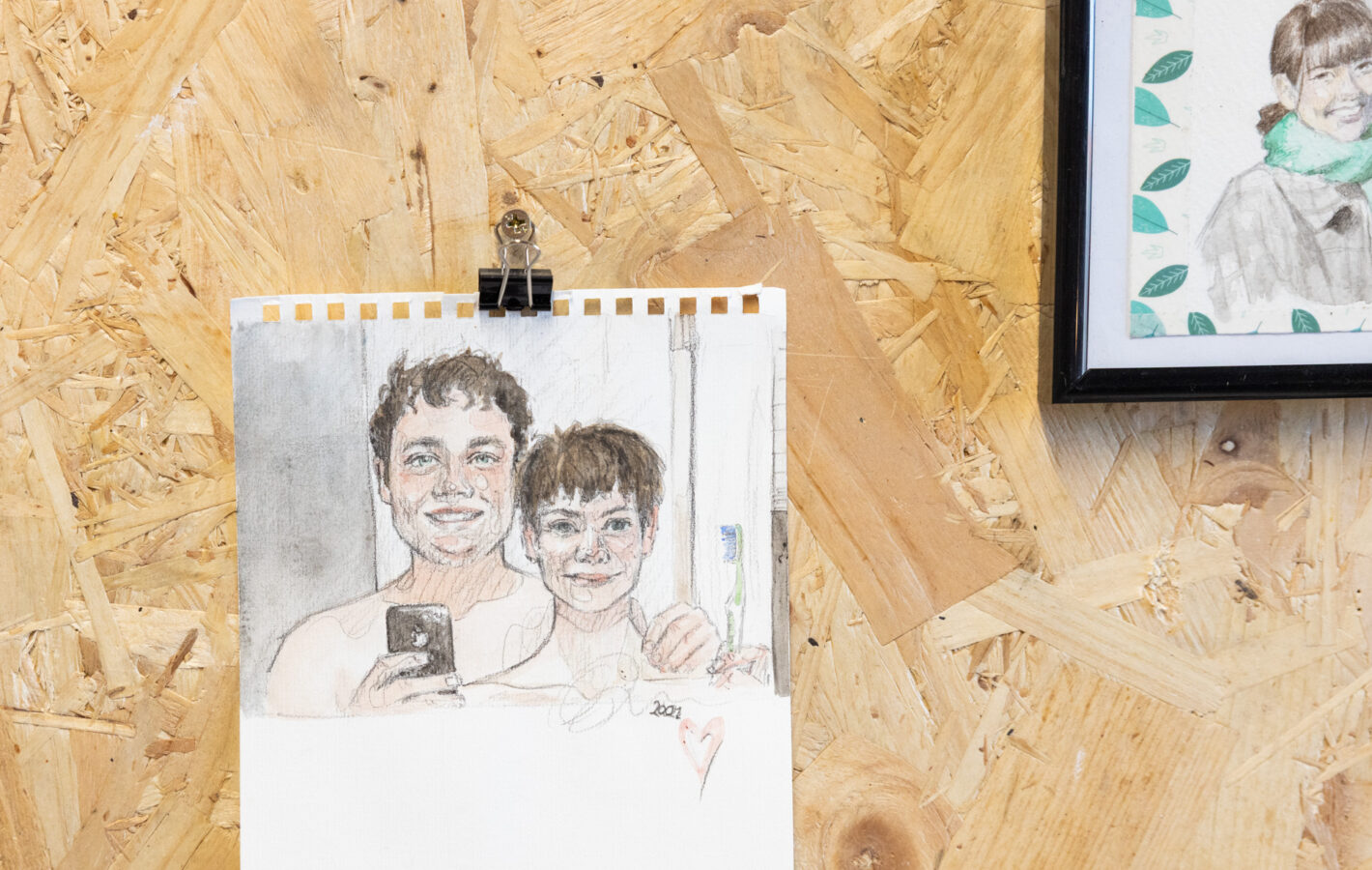
We create purely for the joy of it and to share it with others. We’ll come up and draw, paint, or make music. And we do a lot of collage together. Charlotte used to work digitally, but now we love doing it by hand. It can be silly or serious—sometimes it turns into something we’re really proud of. There’s no pressure, no fear of the blank page.
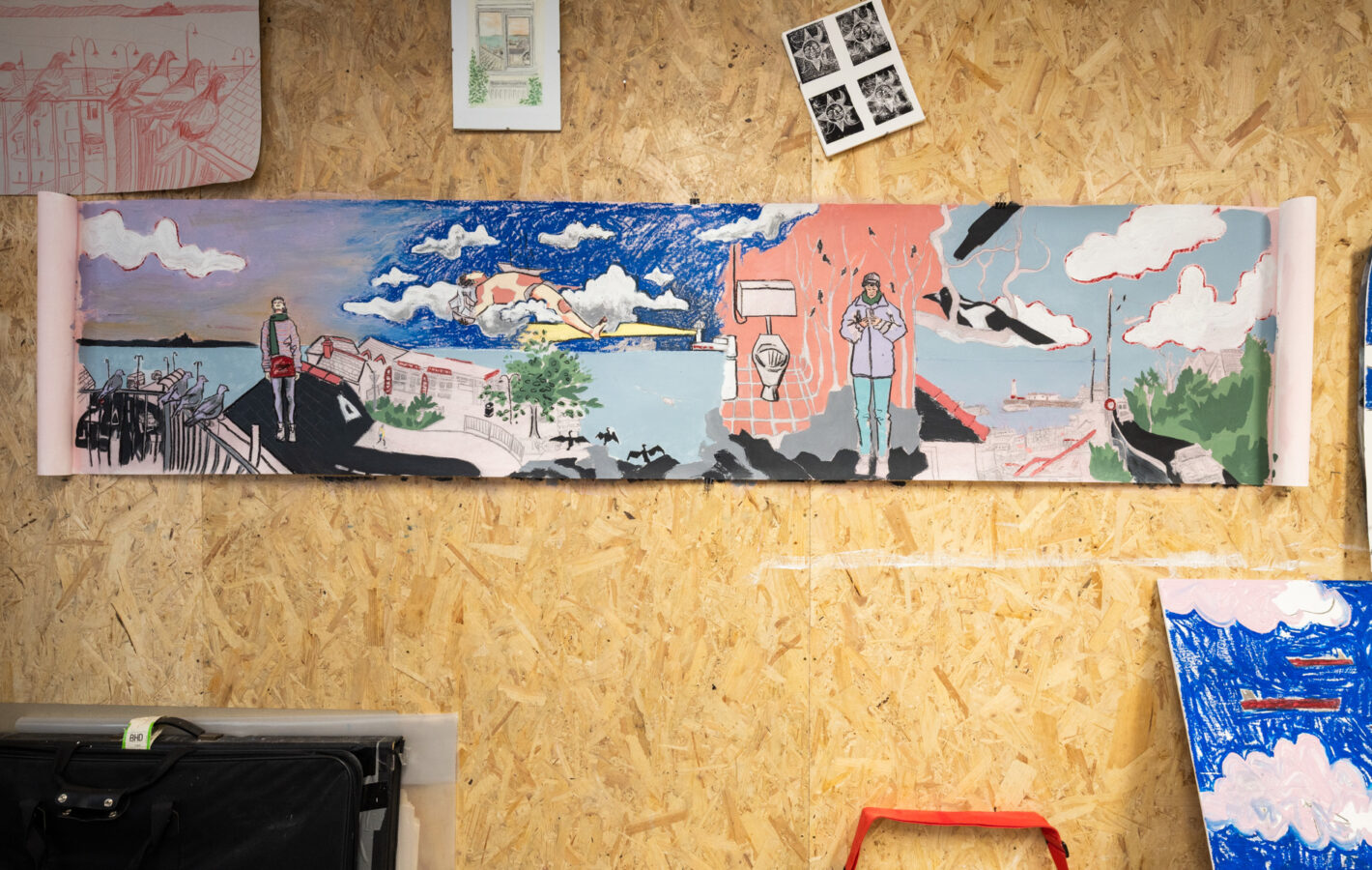
That roll of wallpaper in the corner is from her project, Death Dance. She combined stills from films—half of someone dancing, half of someone dying—and they looked incredibly convincing. She’d planned to wallpaper a whole room with it, velvet curtains, a ticking soundtrack—but because she couldn’t do it physically, she recreated it all virtually.
That sounds like a night and day difference from archaeology. Can you tell us what your day job involves?
I work on scheduled monuments across Cornwall, historic sites that are nationally important. It could be something big, like Stonehenge, or something small, like a tenth-century Christian cross by the road.
Cornwall has around 6,000 years of history—from Neolithic sites to Second World War artifacts—so the variety is huge. It’s a fascinating job. I split my time between the office and the field, and honestly, it’s the dream.
Some monuments must seem hidden or quite ordinary at first glance?
A Bronze Age barrow might just look like a small divot on the top of a hill, but it’s hugely significant. Cornwall has more scheduled monuments than anywhere else, and it’s all beautifully mapped, probably the best in the country.
By law they have to be maintained to a certain standard, so my work’s about managing and protecting those sites rather than excavating them, like you’d see on Time Team. That’s where we come in—helping landowners look after them. Sometimes that means clearing vegetation, because once sites get overgrown, they start to disappear.
Very interesting! And what does Charlotte do outside of her work here?
She works in marketing for Newlyn School of Art—all the social media, newsletters, that sort of thing. And occasionally she has to do things like call the helicopter for the Isles of Scilly.
Sorry, what, calling for helicopters?
They run painting holidays on the islands, with tutors teaching expressive or realistic landscapes. Sometimes materials for their art holidays miss the boat, so she has to ring up and arrange a helicopter delivery.
I also do a bit of life drawing modelling there. It’s not glamorous! You sit for six hours staring at one spot. After a few days straight, your brain turns to fog and you can feel every muscle in your face. At first, I thought, “easy money”, but it’s intense. You totally get why models get grumpy.
You mentioned collaboration earlier—are you working directly with the other creatives here?
Yeah, we’re doing a portrait drawing course with Hugh and Tony next week, they’re art therapists and printmakers. Portraiture isn’t really my thing, but I want to learn to see properly—to draw what’s actually there, not what my brain thinks should be there.
I want to paint one of the stone circles I work on. They’re perfect for cows to scratch on, which eventually knocks them over. I want to paint a cow with this evil, smug look, like it knows it’s making my job harder!
The design intent of the building was to encourage those kinds of connections. Do you feel that’s influenced your work?
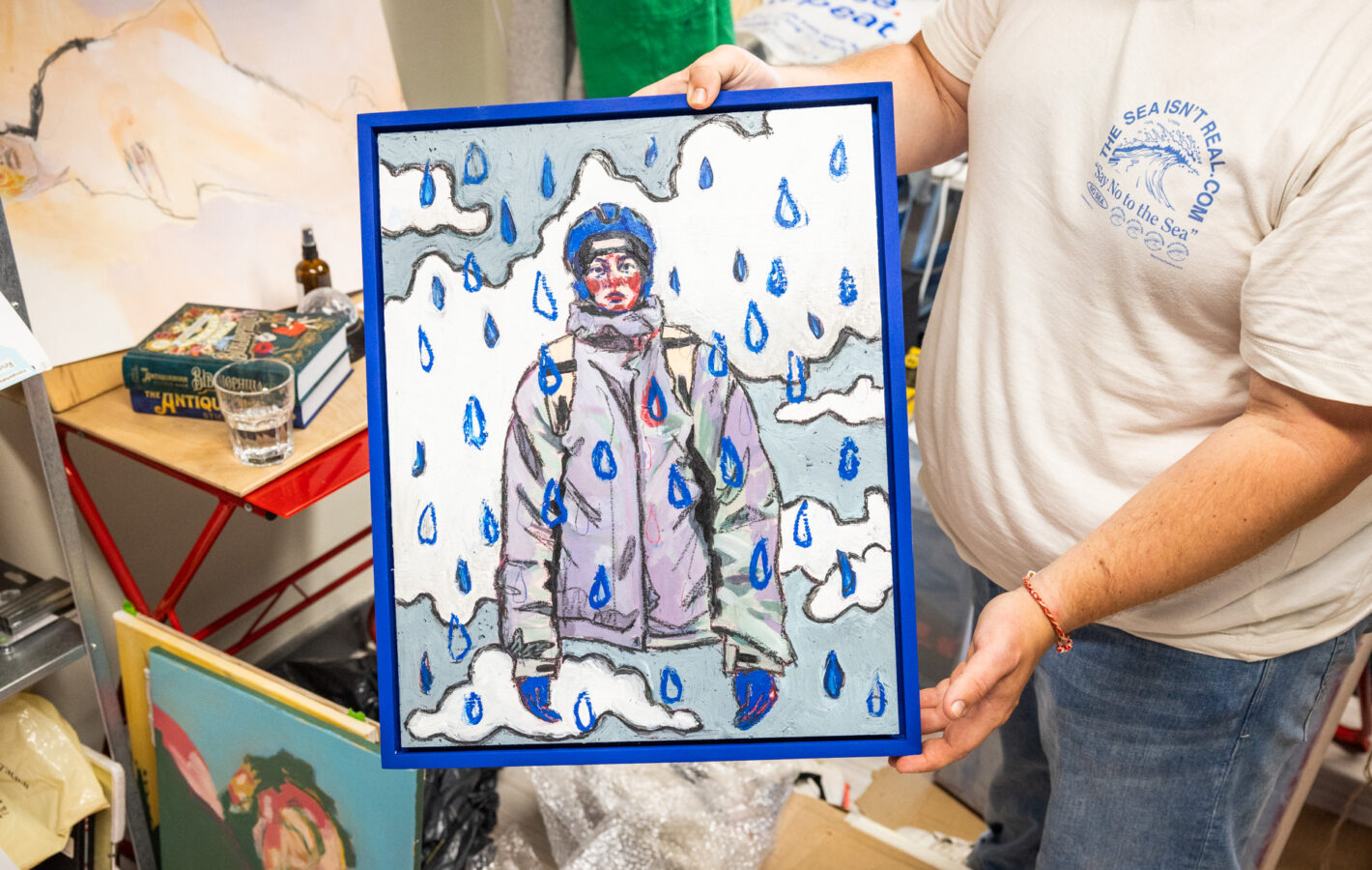
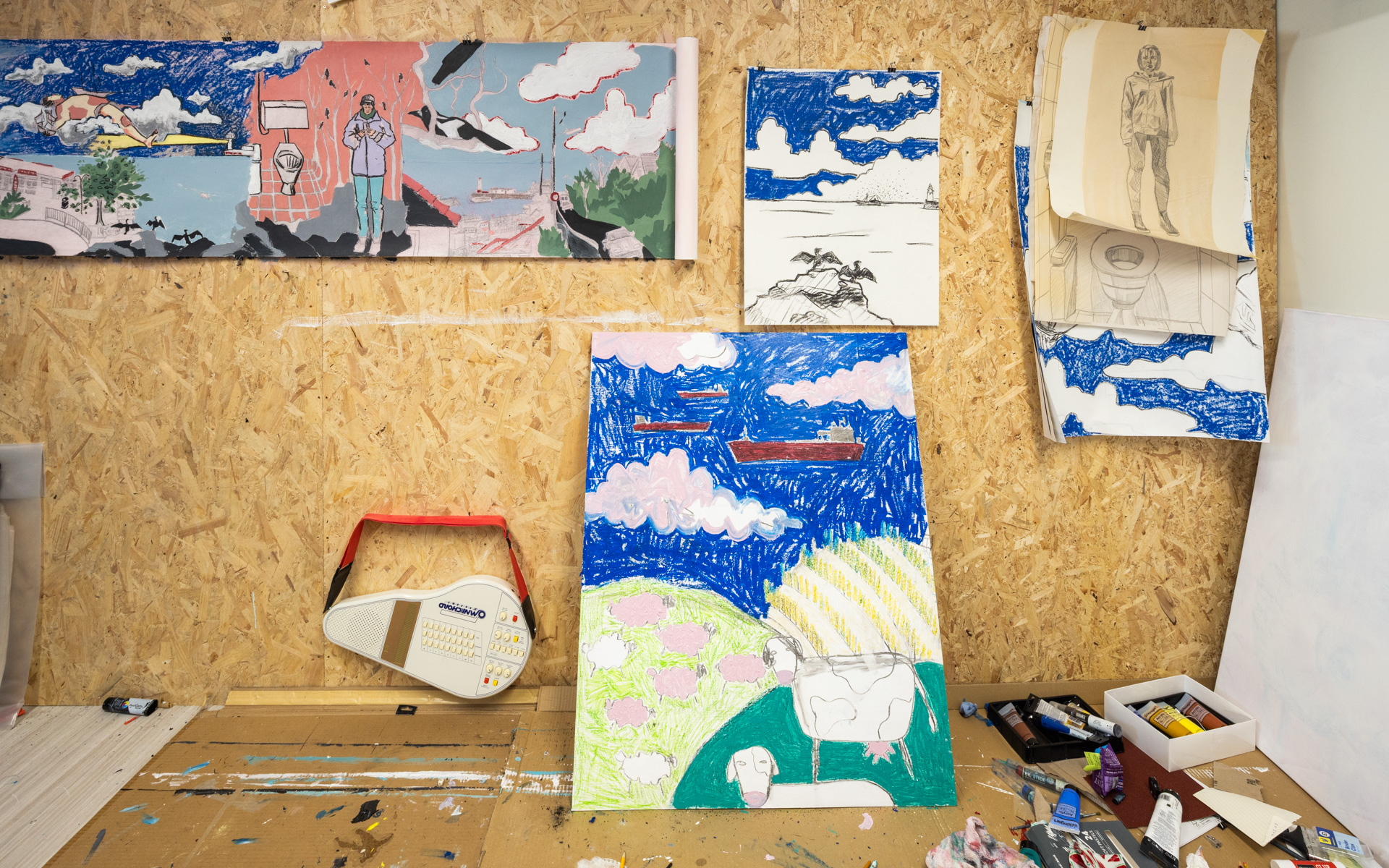
Yeah, massively. That painting there, it’s totally different to Charlotte’s usual work, and was directly inspired by our neighbour Theo, whose work we loved before we even knew him. He brings this sense of childlike wonder to art, and that rubbed off on her.
I do music with people in the building too. It’s a space that really encourages conversation and collaboration.
I think it could go even further though. That outside wall is crying out for some art or photography—anything that shows what goes on inside. The creativity here shouldn’t stay hidden behind closed doors.
We met Ike earlier—one of the students—and it’s interesting how people who don’t even rent space here still get something from it.
Yeah, totally. Charlotte and I often bring people in to have a look around. Last night someone came by, sat right there, and watched her paint.
We do Cornish dancing with a group called Trots and Trays, and when our usual ballroom was out of action, we used this space. We had people in their 60s and 70s—some who’d been sceptical about the building—and brought them inside.
It’s great to be able to say, this is for you too. Pixel’s team is so relaxed about it. We want people who might have been critical to see that it’s an asset for everyone—a place that’s open and welcoming. We do that all the time—invite friends, people from the pub, whoever’s around—to come in and paint or hang out with us.
Is there anything specific about Pixel that makes it work so well for you?
We’d been looking for a creative space for ages—somewhere like a garage with running water and low rent, but those don’t really exist.
We saw Pixel and thought, the people are lovely, but it feels a bit office-y. For it to work for artists, it needed a few changes—like an artist’s sink, or walls we could hammer and screw into. So we said that to the team, and they just said, “yeah, that’s fine.” They put in the sink, boarded the walls—everything we asked for.
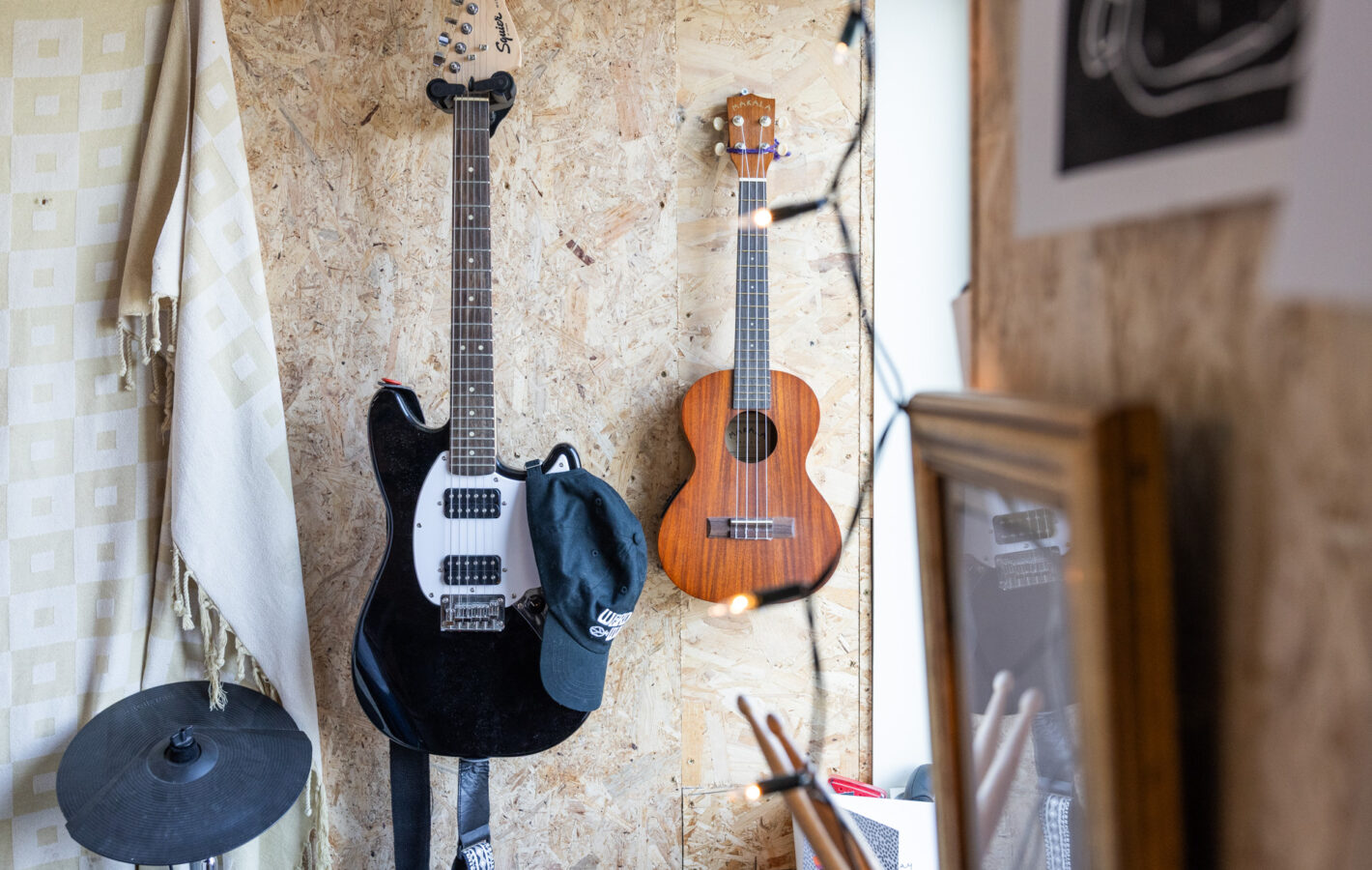
This building can be adapted and made messy. We keep pushing to see where the boundary is, but they’ve said yes to everything so far. Guitars on the wall, moving lights, soundproof panels—people have customised their studios completely. It’s endlessly modifiable.
Thanks, Linus. So interesting to see someone bringing archaeology and art together in such a creative way. We’ll keep an eye out for the smug cow painting!