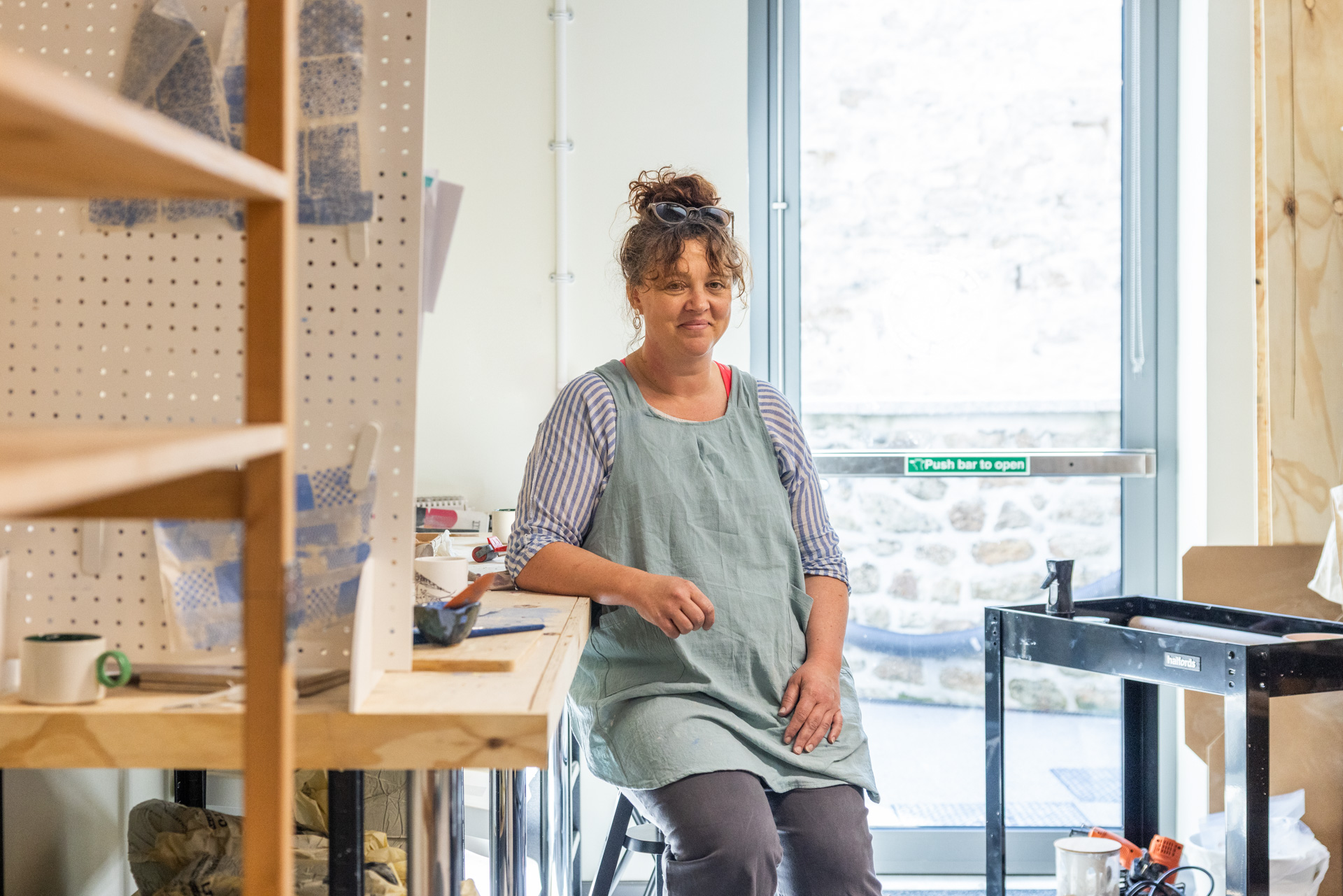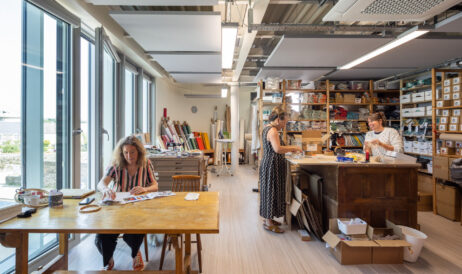

Lois Jones is a ceramic artist who shares a studio space at Pixel. Alongside her practice she runs workshops for people with learning difficulties, inviting them to explore clay with curiosity and a sense of play.
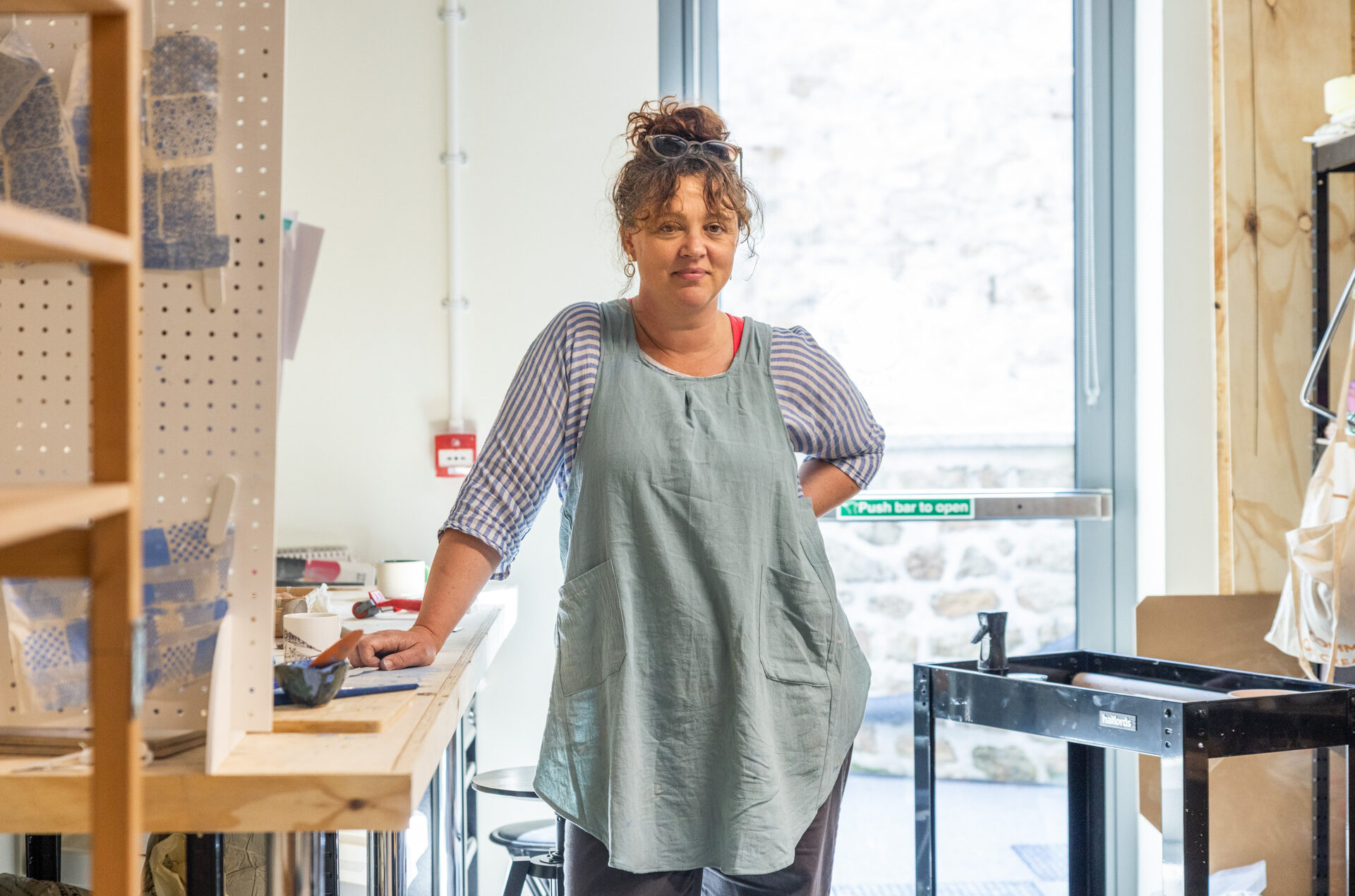
Lois, could you start by telling us about yourself and your work?
I went to Falmouth Art School for a short time back when I was a young single mum. I loved it, but I got to the point where I thought, I need to figure some stuff out.
I come from a lineage of potters and painters, so my family advised me away from the arts and to “get a proper job”. I retrained as a teacher but always kept my own practice going with self-teaching on YouTube and the odd class here and there. Then three years ago, I ended up in Camborne and volunteered at this amazing CIC called Create Community Craft Hub. Doing that felt like I’d found the missing jigsaw piece—combining education and community work with ceramics.
I learnt so much there and I loved the community aspect, leading youth activism projects and focusing on accessibility for everyone. I adore getting people involved, helping demystify the whole thing—forget about the outcome, just be in the moment. That’s my passion.
You’re now at Pixel sharing a studio space. Was that always your plan?
If I’m completely honest, at first I didn’t want to share. I loved the building and really wanted to be here, but I just couldn’t see how it was going to work. But I’m so pleased I did. It already feels like a cooperative of artists. You know when you just get that spark? As soon as you meet each other, ideas start bouncing.
I share with Molly who’s a thrower, whereas I’m a hand builder and sculptor, so we’re working out what we want to do and how we’ll do it. And then Emily’s kids go to the same school as mine, but we didn’t know each other before. It’s been really nice. It feels like The Great Pottery Throw Down. Like they’re my pottery family!
Do you think that sense of community will change your work?
I used to be quite private about my work—you want to make your mistakes privately sometimes, feel free to chuck things in the kiln that maybe you wouldn’t want anyone else to see, break the rules without judgement. That was a barrier at first, but now I think the benefits far outweigh that.
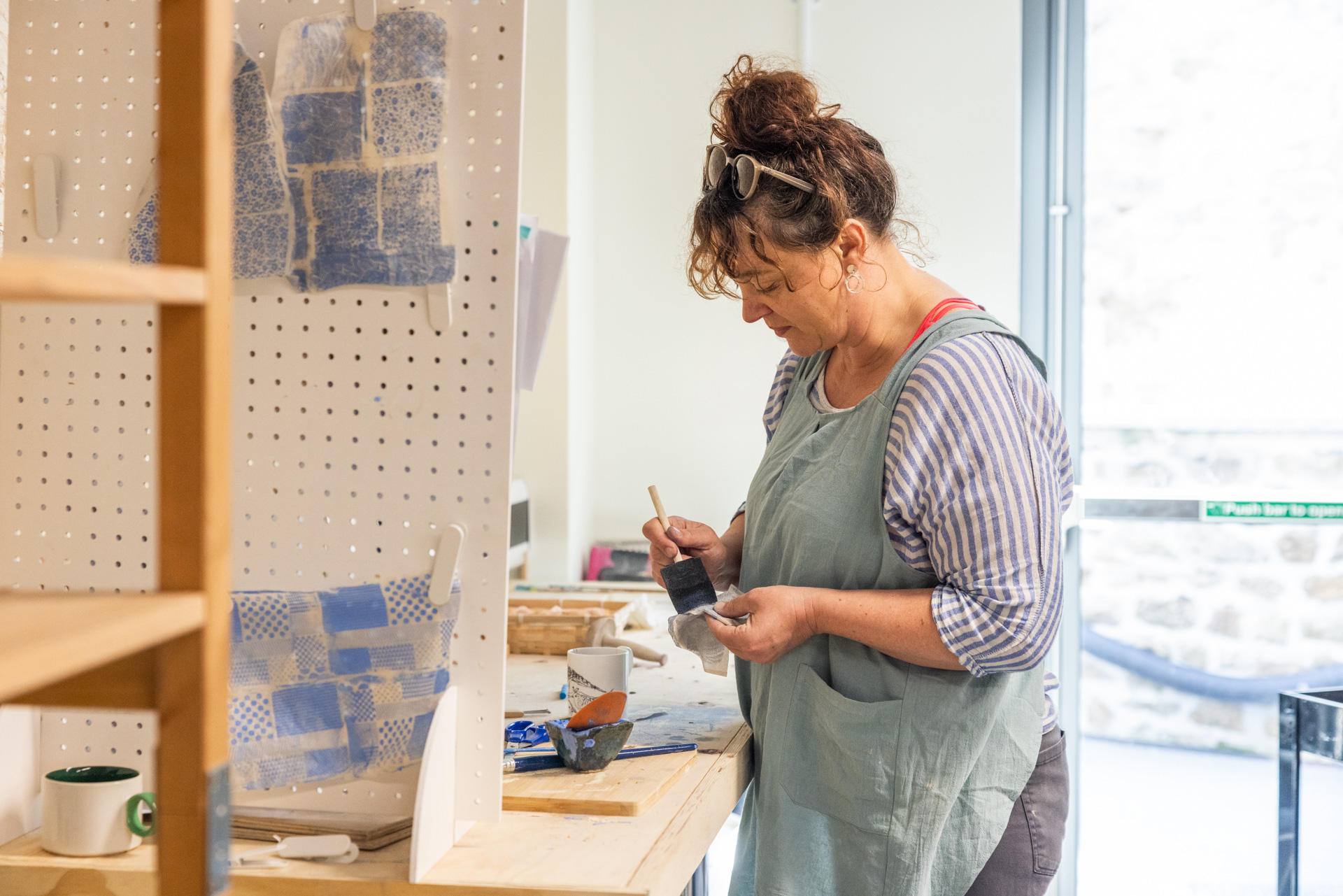
With it being an open plan space, how have you negotiated that?
It’s funny, the floor was marked out originally for maybe six of us, but we quickly realised four would be the max in this room. I was going to go next door, but I wanted a teaching space, and the others are production throwers, so Maisie had to figure out who would gel and how to make it work.
It was a bit like speed dating—we all stood in the room, weirdly each in a corner, claiming our space. Molly needs more room for throwing, so she’s now in that corner, and I wanted light, so I gravitated to the little alcove. I quite like being tucked against the wall.
And you’re teaching too, can you tell us more about that?
I work with adults with learning disabilities, in really small groups. This morning I had three in here. I’ve also done a workshop with my kids’ friends to test how that could work.
We’ll use part of the space as a multi-functional area—a table, three wheels—and run it like a cooperative space where people can rent time if they want to. There are so many artists here who just want to try. They’ll be able to do a workshop with me, Molly, maybe Emily too, then come back to practice in their own time. Everyone wants to give it a go!
But we’re going to put up a poster saying, “Don’t mention ‘Ghost!’ It’s not original, everyone says it!”
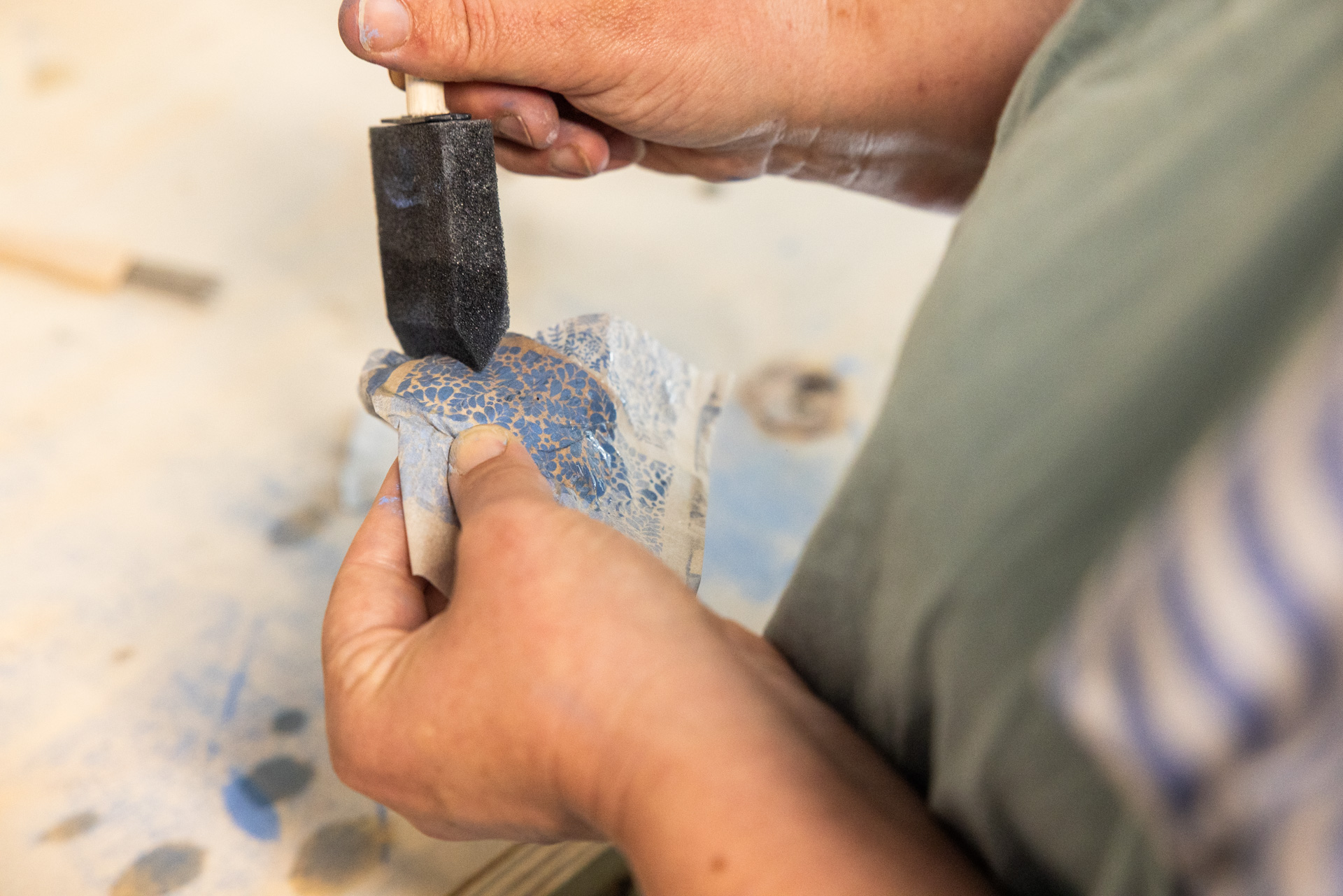
That’s great. And what’s the vibe like across the wider building?
I love it. Every morning you come in and end up having proper philosophical debates in the shared space with whoever’s in first. It’s like being at college again, all this freedom and nobody breathing down your neck.
We keep joking it’s utopia—there are always biscuits someone’s baked and left out. Honestly, it’s better than I expected. I loved the building from the start—a tiny car park turned into this creative space. It’s so exciting.
Has being here changed your connection to Penzance?
Definitely. I moved here during a crisis, I’d lost my home in COVID, ended up in Newlyn, and hadn’t really recovered from that. Because I was working in Camborne, I couldn’t properly integrate into the community. Now this place has just created one!
What’s special is the diversity of people and industries here, but you walk in and everyone’s like-minded. It’s quite exceptional. You wouldn’t automatically think it would work, but it does.
Do these networks exist outside this building too?
Yeah, the Forward Space crew are doing a great job of making that happen with events, group chats, regular meet-ups. Post-COVID, everyone wants connection and community. This space gives you that. You can just come in, be around people, or keep to yourself if you want to.
The central island in the middle helps—it’s such a good gathering spot. And the terrace is great for BBQs!
It sounds like you’re loving it here, Lois. Is there anything you’d change?
I love the lights outside, when the building’s lit up at night it looks amazing. But there was a disco version at one point that I think even the kids are divided on. I thought they’d love the bright lights, but maybe it’s like those high-pitched alarms only kids can hear!
Thanks so much, Lois—really enjoyed hearing how you’ve made the space your own.