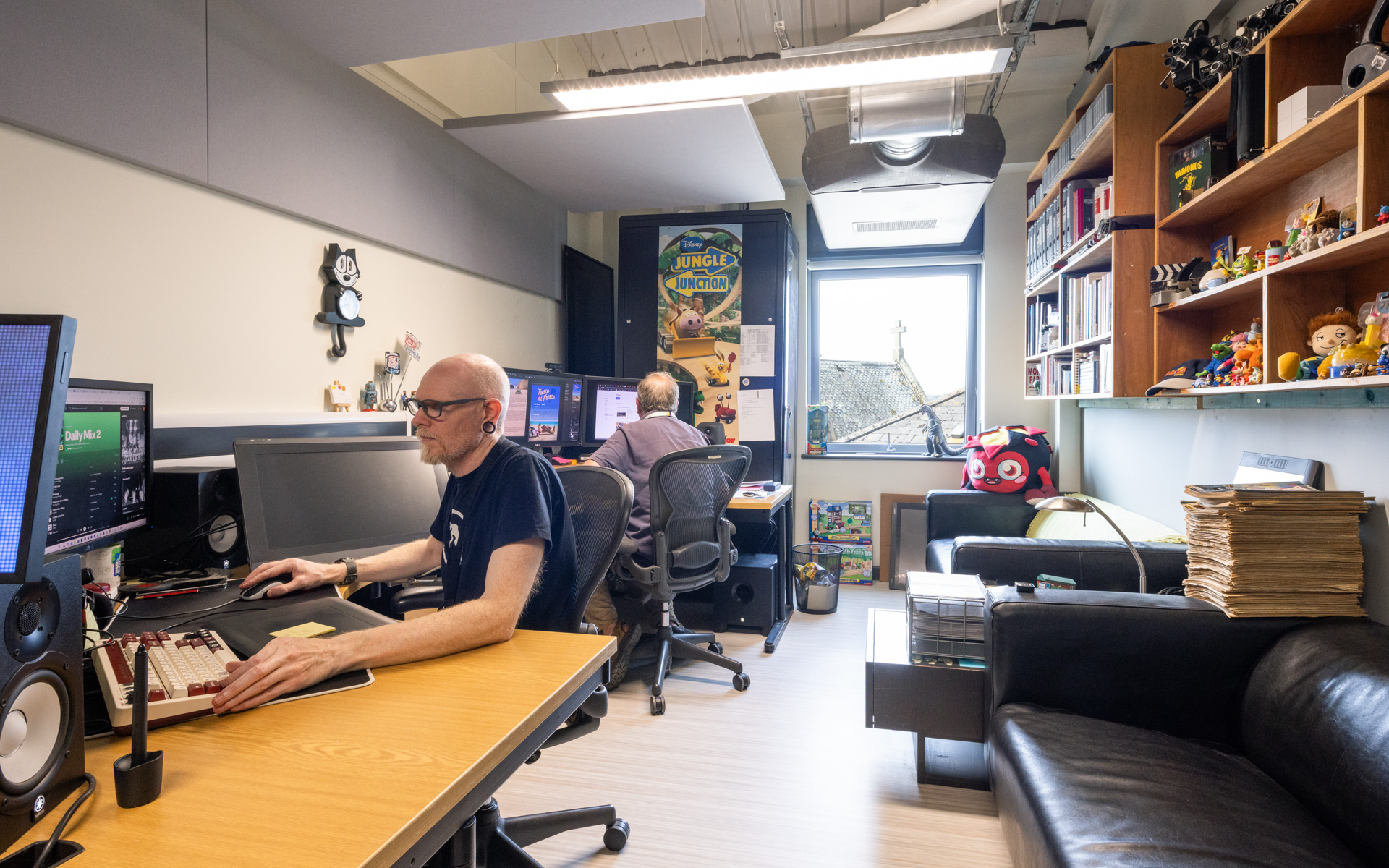

Morgan Francis runs Spider-Eye, an award-winning, BAFTA-nominated animation studio. Founded in London in 1998, the company has grown from a 50-person team to a nimble creative outfit now based at Pixel—surrounded by other makers, technologists, and storytellers.
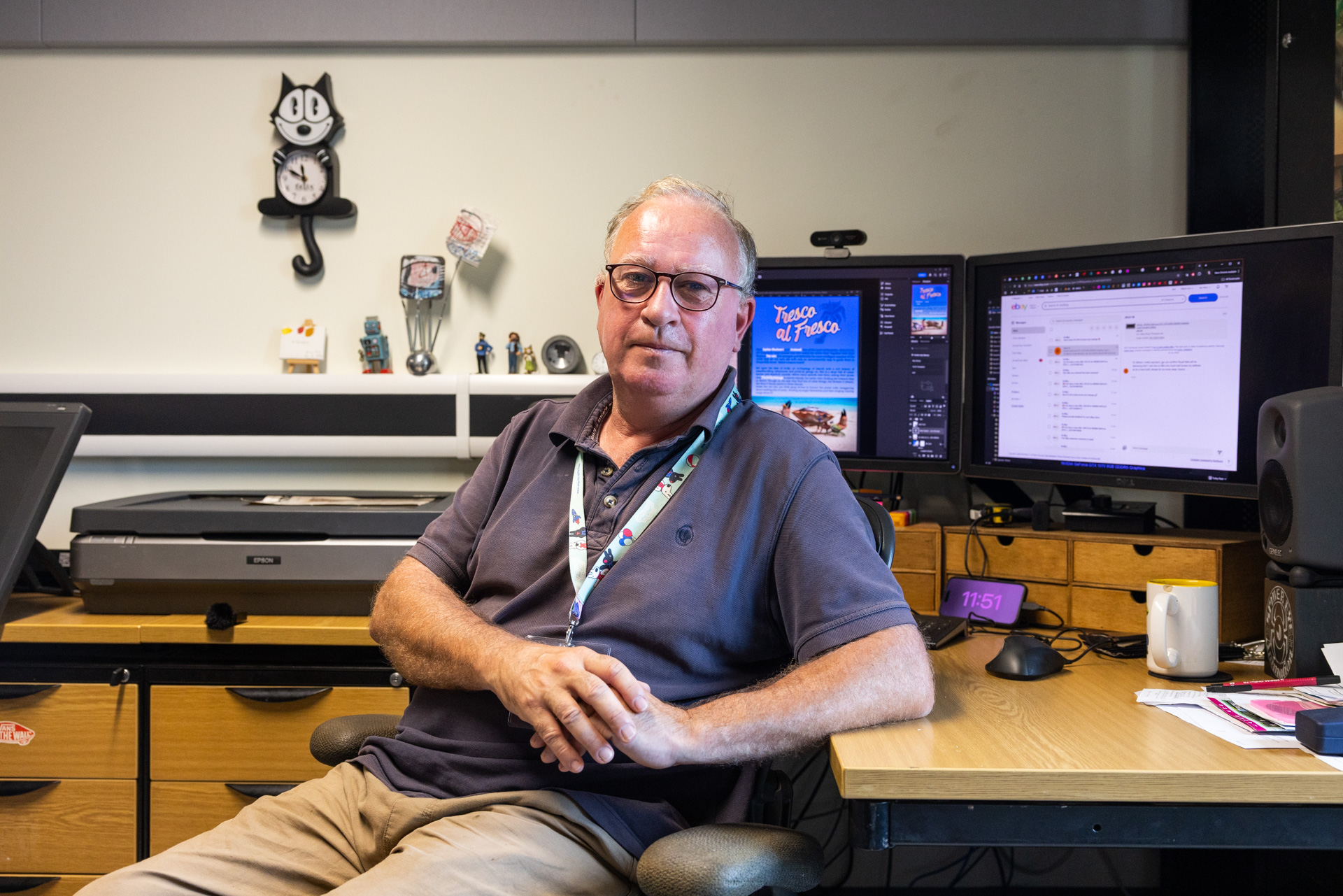
Morgan, what made you move the company down to Cornwall?
It’s just a better quality of life, for sure. That’s the main benefit. I grew up in London, so I’d been working there for 30-35 years. Spider-Eye was there for about four or five years before we moved to St Just, in Cornwall.
How would you compare that shift from London to Cornwall?
Up there you’re always bumping into people, going to the same pubs and bars, doing normal networking. Obviously, that doesn’t really happen here. I’d say that’s the main downside—if we were still in London, we’d probably get more work just through social interaction. But we’re networking within the building instead, meeting other creatives.
So there wasn’t much of an animation industry in Cornwall before you moved?
We sort of brought the industry down with us. Falmouth University runs an animation course, so they’re pumping out animation graduates all the time. We try to hire them when we’ve got the work.
The whole industry is going through a bit of a rough time at the moment. There’s a lot of large visual effects companies working on films that have had massive overruns and have gone to the wall, so there’s an influx of employees looking for work. One of the good things about being here is we’ve got almost no overheads.
Were the low overheads part of what attracted you to this space?
The electricity being included in the rent was definitely a big selling point! We’ve got servers running, workstations full on. There was a point a few years ago where we were paying £2,000 a month just on electricity. We’ve improved our electrical efficiency since then, but still, that and the option to downsize was a big pull.
We were employing over 50 people at St Just. In those days we had everyone in-house. When this place became available, it was a good time to downsize, because now all our staff can work remotely and it lowers our carbon footprint.
You mentioned networking with other people in the building, are you working with any of the other companies here?
We’re using the same tools, same systems as the guys here doing special effects. They’re adding effects to movies, whereas we’re creating characters and then selling intellectual property.
There’s also a user interface designer here, James, who said he needs animation, so that’s something that comes up. It’s possible. Like I said, it’s not quite as busy here as in London where you’ve got 500 animation companies, so it’s very specifically loaded towards that industry. It’s more diverse disciplines here.
And how are you finding the social side of the building?
We tend to socialise on the floors—we tend to know more people on our floor than anywhere else. We have a shared kitchen so we’re meeting people that way. I think they’ve separated us with that in mind, because we’re more techie up here and they’re more crafty-based on the first floor.
We go downstairs when they have events. They have barbecues and socials, and they do freebies and we normally go for those. There’s a WhatsApp group where they’ll share pictures of cake and things.
Has being in this building changed your idea of what Penzance is?
A little bit, yeah. I feel like it’s kind of on the up. It did reach quite a downturn, I think, socially and with a lot of shops closing. It affected the whole town, probably about 10 years ago was when it was at its worst. Since then there’s been a steady incline.
I think people have worked out that it’s like Brighton—it’s cheap, it’s on the seaside, it’s a good place to be. There’s lots of good schools and things. So I think we’re in the gentrification process there.
Doing up the promenade was a big move, which was needed, making more of a feature of that. There’s cafés and coffee shops there now. You’ve got to play to the strengths of the place. And there’s more independent shops. It’s brought a lot of life to the top of town. This area was just a dead zone.
Do you think Pixel being here will help the High Street?
Yeah, obviously everyone here is going to need to go out and get lunch and things. I think it helps with regeneration and the aesthetic. It’s new and exciting. For those that aren’t the naysayers that will just hate any change, for everyone else it looks new and exciting. It feels progressive. So that’s a positive. I think the majority of people think it’s a positive.
Thanks so much, Morgan—great to hear how you’ve brought the industry south and how Pixel’s helping shape the next chapter.